

Wellness coaching is defined as a professional partnership in which a trained coach helps individuals identify meaningful health goals and build the motivation, accountability, and skills to achieve them sustainably. Unlike medical treatment or generic fitness advice, wellness coaching, also called health and wellbeing coaching, focuses on the behavior change process itself. It works because it meets people where they are, rather than prescribing where they should be. Whether you are an individual seeking greater resilience or a corporate leader looking to strengthen your team’s performance, understanding what wellness coaching actually delivers is the first step toward making it work for you.
What is wellness coaching and how does it work?
Wellness coaching is a client-centered structured process built around SMART goals, collaborative conversation, and referral to medical professionals when a client’s needs exceed the coaching scope. The coach does not diagnose, prescribe, or advise in the clinical sense. Instead, the coach creates conditions in which the client discovers their own motivation and designs their own path forward.
The core mechanism is the coaching relationship itself. A skilled coach uses active listening, open-ended questioning, and reflective techniques to help clients surface what they genuinely want and what has been stopping them. This is fundamentally different from a consultant telling you what to do or a trainer counting your reps. The coach holds the space; the client does the thinking.

One of the most practical frameworks in the field is the 70/30 conversation rule: the client speaks 70% of the time, and the coach listens and questions for the remaining 30%. This ratio is not arbitrary. Research from Meridian University shows it maximizes client clarity and ownership, which are the two strongest predictors of follow-through.
Effective wellness coaching also integrates whole-person lifestyle medicine, addressing nutrition, sleep, stress, and social connection as interconnected dimensions of health rather than isolated problems. Harvard Medical School’s lifestyle and wellness coaching programs reflect this multidimensional approach, recognizing that sustainable change rarely comes from fixing one variable in isolation.
The key techniques used in professional wellness coaching include:
- Motivational Interviewing (MI): A research-backed method that engages client ambivalence directly, drawing out the client’s own reasons for change rather than imposing external pressure.
- SMART goal setting: Goals that are Specific, Measurable, Achievable, Relevant, and Time-bound give clients a clear structure to track progress without feeling overwhelmed.
- Accountability check-ins: Regular sessions create consistent touchpoints that keep momentum alive between major milestones.
- Scope-appropriate referrals: When a client presents clinical needs, a professional coach refers them to licensed healthcare or mental health providers rather than attempting to address issues outside their training.
Pro Tip: Before your first coaching session, write down three areas of your health or work life where you feel the gap between what you know you should do and what you actually do. That gap is exactly where a wellness coach adds the most value.
What measurable benefits does wellness coaching offer?
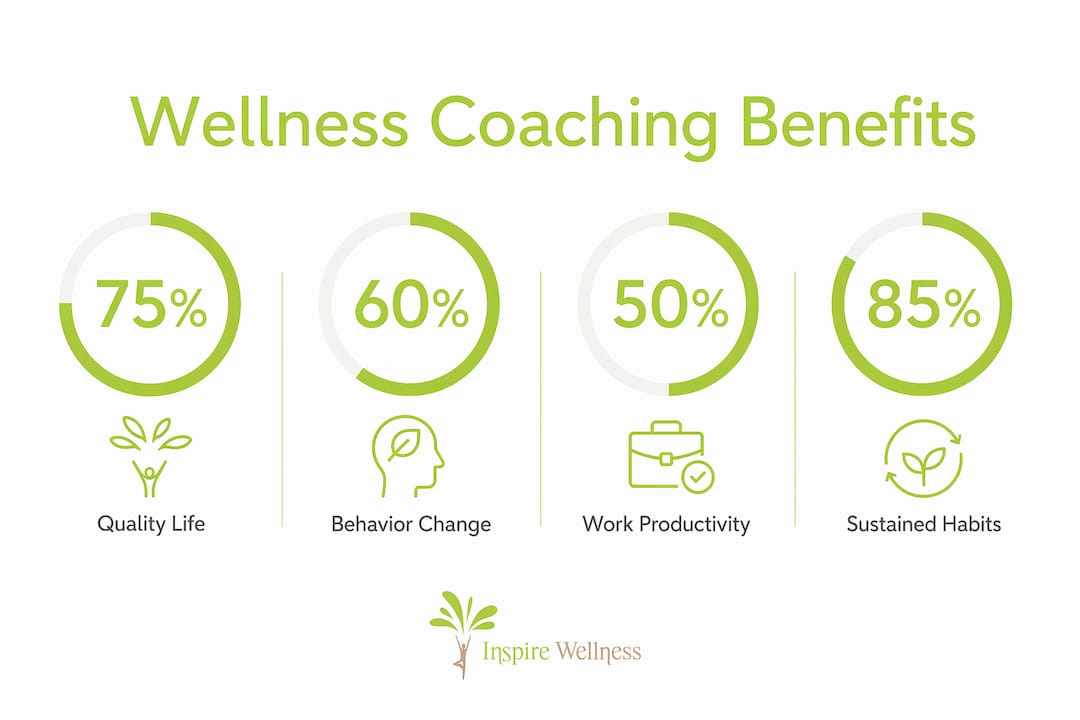
The evidence for wellness coaching’s impact is specific and time-stamped, which makes it easier to set realistic expectations. Research shows that quality of life improves within 3 months, self-efficacy within 1.5 months, and depression scores show measurable improvement across 3 to 12 months of consistent coaching engagement. These are not marginal gains. They represent meaningful shifts in how people experience daily life and manage stress.
One finding that surprises many people is that human coaching contact is the primary predictor of positive outcomes, outperforming technology-only interventions. Apps, trackers, and digital programs have their place, but they cannot replicate the accountability and relational depth that a real coaching relationship provides. Participants with ongoing human coaching show higher dietary adherence and stronger psychological resilience than those using self-directed digital tools alone.
“Coaching supports client motivation and follow-through as the core mechanism for sustainable change. It bridges the intention-action gap through collaborative partnership rather than prescriptive advice.” — Meridian University Research
For corporate teams, the benefits extend beyond individual health. Wellness coaching in workplace programs shows promising outcomes for employee resilience, engagement, and productivity. When employees receive personalized behavior change support, absenteeism drops, burnout decreases, and team collaboration improves. These are outcomes that translate directly into business performance.
| Benefit area | What research shows |
|---|---|
| Quality of life | Significant improvement documented within 3 months of coaching |
| Self-efficacy | Measurable gains within 1.5 months, supporting habit confidence |
| Depression scores | Positive shifts observed across 3 to 12 months of engagement |
| Dietary adherence | Higher in groups with regular human coaching vs. digital-only programs |
| Corporate resilience | Improved employee engagement and reduced burnout in workplace programs |
The cumulative picture is clear: sustained coaching relationships enable small, manageable habit changes that build lasting self-efficacy. Willpower-based overhauls rarely hold. Gradual, coach-supported habit embedding does.
Wellness coaching vs therapy: how are they different?
This is one of the most common points of confusion, and getting it right matters for both safety and effectiveness. Wellness coaching is not therapy, not medical consultation, and not personal training. Each role has a distinct scope, and understanding those boundaries helps you choose the right support for your actual needs.
| Role | Primary focus | Scope | Approach |
|---|---|---|---|
| Wellness coach | Behavior change and goal achievement | Non-clinical; refers out when needed | Client-directed; coach facilitates |
| Therapist or counselor | Mental health diagnosis and treatment | Clinical; licensed and regulated | Clinician-directed; evidence-based treatment |
| Consultant | Expert advice and recommendations | Domain-specific expertise | Advice-giving; prescriptive |
| Personal trainer | Physical fitness and exercise | Body-focused; performance-oriented | Trainer-directed; instruction-based |
Coaching is not advice-giving. This distinction, emphasized by the National Board for Health and Wellness Coaching (NBHWC), is the one most often misunderstood. A coach does not tell you what to eat, which exercise program to follow, or how to manage your anxiety. The coach asks the questions that help you figure out what you want to do and then supports you in doing it consistently.
Therapy, by contrast, is appropriate when someone is dealing with diagnosed mental health conditions, trauma, or clinical depression. A good wellness coach recognizes these boundaries and refers clients to licensed mental health providers when the situation calls for it. The two roles can work in parallel. Many clients in therapy also benefit from wellness coaching to support the behavioral and lifestyle dimensions of their recovery or growth.
What makes wellness coaching uniquely valuable is its focus on the knowing-doing gap. Most people already know they should sleep more, move their bodies, and manage stress. The coach’s role is to help them actually do it, consistently, over time. That is a different skill set from diagnosis or instruction, and it requires its own professional training and certification.
How to choose a wellness coach for your needs
Choosing the right wellness coach is a decision that deserves the same care you would give to hiring any professional who will influence your health. The field has grown significantly, and not all practitioners meet the same standards. Here is a structured approach to making a confident choice.
-
Verify board certification. The NBHWC is the primary credentialing body in the United States. Board certification and evidence-based training in frameworks like Motivational Interviewing are the clearest markers of professional-grade coaching. Ask directly whether the coach holds a recognized credential.
-
Assess their coaching philosophy. A qualified coach should describe their work as client-centered and longitudinal. If a coach promises rapid transformation or offers a fixed program with no room for your input, that is a red flag. Effective coaching is built around your goals, not a pre-packaged curriculum.
-
Ask about their experience with your specific context. A coach who works primarily with athletes may not be the best fit for a corporate professional managing burnout. A coach experienced in workplace wellbeing will understand the pressures, time constraints, and organizational dynamics that shape your health behaviors.
-
Evaluate the engagement model. One-off sessions rarely produce lasting change. Look for coaches who offer ongoing relationships with regular check-ins, because consistent human support is what the research identifies as the primary driver of positive outcomes.
-
For corporate programs, consider cultural fit. Research from the NBHWC highlights that a diverse coaching workforce reflecting client backgrounds strengthens trust and engagement. When selecting a provider for your team, ask how they match coaches to employees and whether they account for cultural and linguistic diversity.
Pro Tip: Request a discovery call before committing to any coaching relationship. Use it to assess whether the coach listens more than they talk. A coach who dominates the conversation in the first meeting will likely do the same in sessions.
Key takeaways
Wellness coaching works because it addresses the gap between knowing what to do and consistently doing it, through structured partnership, accountability, and evidence-based behavior change methods.
| Point | Details |
|---|---|
| Core definition | Wellness coaching is a client-directed partnership focused on behavior change, not medical advice or diagnosis. |
| Measurable outcomes | Quality of life, self-efficacy, and depression scores all show documented improvement within months of coaching. |
| Human contact matters | Regular human coaching contact outperforms digital-only tools in driving dietary adherence and psychological resilience. |
| Coaching vs. therapy | Coaches facilitate client-driven goals; therapists treat clinical conditions. Both can work in parallel. |
| Choosing a coach | Prioritize NBHWC board certification, a longitudinal engagement model, and experience relevant to your context. |
Why I believe wellness coaching is the most underused tool in corporate health
I have spent years working at the intersection of behavioral science and workplace wellbeing, and the pattern I see most consistently is this: organizations invest heavily in gym memberships, health screenings, and wellness apps, then wonder why employee burnout rates stay stubbornly high. The missing piece is almost always human accountability.
What wellness coaching offers that no app or seminar can replicate is a sustained, personalized relationship in which someone is genuinely invested in your progress. That sounds simple, but it is rare. Most workplace health programs are designed for scale, which means they are designed for the average employee. Coaching is designed for the actual person sitting in front of you.
I also want to push back on the expectation that coaching should produce fast results. The research is clear that lasting habit change takes months, not weeks. Organizations that pilot coaching programs for six weeks and declare them ineffective are measuring the wrong thing at the wrong time. The real return on investment shows up in reduced absenteeism, stronger team cohesion, and employees who manage stress without burning out. Those outcomes require patience and sustained commitment from leadership.
The most encouraging trend I see in 2026 is that forward-thinking companies in the UAE and across the Gulf region are beginning to treat wellness coaching not as a perk but as a performance strategy. That shift in framing changes everything. When coaching is positioned as a tool for building resilient, high-performing teams rather than a nice-to-have benefit, it gets the organizational support it needs to actually work.
— Neelam
How Inspire-wellness supports your coaching goals
At Inspire-wellness, we design wellness coaching programs that go beyond generic wellbeing initiatives. Our corporate wellbeing coaching in the UAE combines board-certified coaching expertise with behavioral science frameworks tailored to your organization’s specific culture, challenges, and goals. We work with businesses of all sizes to build resilient, engaged teams through personalized coaching relationships that deliver measurable outcomes. Whether you are an individual seeking to build healthier habits or an HR leader looking to reduce burnout across your workforce, we are ready to partner with you. Reach out to Inspire-wellness today to explore how structured, evidence-based coaching can transform your team’s health and performance.
FAQ
What is wellness coaching in simple terms?
Wellness coaching is a professional partnership in which a trained coach helps you set meaningful health goals and build the habits to achieve them. The coach does not give medical advice; instead, they support your motivation and accountability through structured conversation.
How long does wellness coaching take to show results?
Research shows self-efficacy improvements within 1.5 months and quality of life gains within 3 months of consistent coaching. Depression scores show measurable improvement across 3 to 12 months, making ongoing engagement more effective than short-term programs.
Is wellness coaching the same as therapy?
Wellness coaching and therapy serve different purposes. Therapy addresses clinical mental health conditions through licensed, regulated treatment, while coaching focuses on behavior change and goal achievement within a non-clinical scope.
How do I know if a wellness coach is qualified?
Look for coaches credentialed by the National Board for Health and Wellness Coaching (NBHWC) and trained in evidence-based methods like Motivational Interviewing. Board certification is the clearest indicator of professional-grade coaching practice.
Can wellness coaching benefit corporate teams?
Yes. Wellness coaching integrated into workplace programs improves employee resilience, engagement, and productivity while reducing absenteeism and burnout. Personalized coaching support produces stronger outcomes than generic group wellness initiatives.