
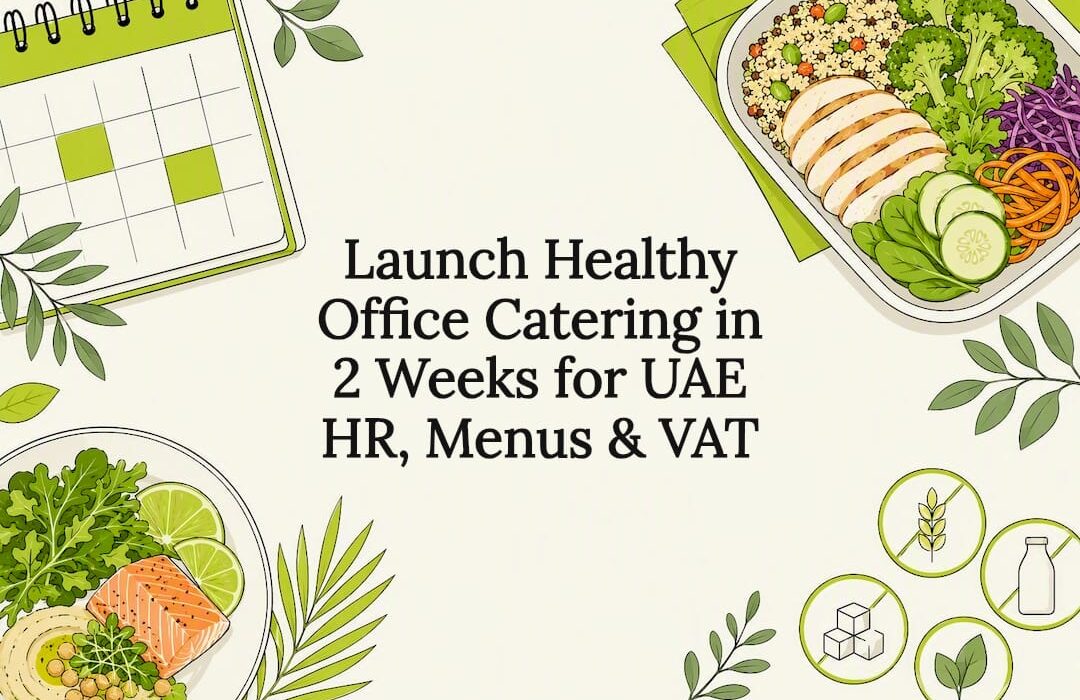
For most offices, the smartest starting point is dietitian-curated boxed lunches or mixed platters with clear dietary flags, paired with VAT-invoiced billing from day one. That combination gives HR the best balance of health, convenience, and procurement friendliness. The sections ahead cover sample menus, how to vet a provider, realistic budgets, and a short implementation checklist you can hand to your team this week.
TL;DR:
- Boxed lunches are the most cost-effective and convenient option for desk-based employees, but packaging waste is a concern unless compostable containers are used.
- Menus should always include clear calorie, allergen, and portion size labels, with dietitian involvement in menu design to ensure nutritional accuracy.
- Vendors must provide VAT invoices with a valid Trade Registration Number and offer transparent substitution policies and allergen labeling.
- Tasting sessions before committing to a contract are recommended to verify quality and clarify substitution practices in writing.
- A two-week pilot focusing on energy and satisfaction metrics can help measure the impact of catering on workplace wellbeing.
Table of Contents
- Which Healthy Catering Formats Work Best for Your Office?
- What Should a Healthy Office Menu Actually Include?
- How Do You Choose and Brief a Healthy Catering Partner?
- What Do Healthy Catering Budgets and Timelines Look Like?
- A Step-by-Step Checklist to Launch Your Catering Program
- Why Nutrition-Led Catering Matters for Workplace Wellbeing
- What About Vegetarian, Vegan, Halal, Gluten-Free, and Allergy Needs?
- A Practical Take From the Field
- Turn Healthy Catering Into Measurable Wellbeing Gains
- Sources
Which Healthy Catering Formats Work Best for Your Office?
Choosing a format is really a question of how your people eat, not just what they eat. A finance team glued to desks needs something different from a sales floor hosting client visits every Thursday.
- Boxed lunches suit recurring desk-based meals. They travel well, require no serving staff, and keep portion sizes consistent, though packaging waste is a real trade-off unless your provider uses compostable containers.
- Buffet or platter setups work for team lunches and townhalls where people want to build their own plate, as featured in these fun corporate event ideas for planners and HR teams. They need more space and at least one attendant for hygiene, but they encourage social eating and reduce individual packaging.
- Plated service fits client-facing events and leadership dinners. It looks polished but needs the most staff and lead time.
- Snack stations stock the pantry between meals with nuts, roasted chickpeas, and fresh fruit. They’re low-maintenance but need weekly restocking discipline.
- Subscription models deliver a rotating menu on autopilot, cutting the ordering workload HR usually absorbs.
Hybrid offices often blend two: a snack station for daily grazing and boxed lunches for scheduled team days. That combination keeps food fresh without overloading facilities staff with deliveries every single morning.
What Should a Healthy Office Menu Actually Include?
A workable menu brief gives your caterer enough structure to build something appealing without turning every meal into a spreadsheet exercise. Use these five templates as a starting point for an RFP or pilot order.
- Balanced boxed lunch: a lean protein (grilled chicken, tofu, or fish), a whole grain (quinoa, brown rice, or farro), a vegetable side, and a piece of fruit, landing in a 400 to 650 calorie range per box. Always request a vegetarian or vegan version built from the same template, not an afterthought swap.
- Mediterranean platter set: mixed salads, grain bowls, hummus, and grilled protein served family-style. Ideal for shareable meetings where people linger over food.
- Protein-forward hot option: a lean protein with a whole-grain side and roasted vegetables, useful for colder months or physically demanding shifts where a cold box lunch feels thin.
- Breakfast and snack packs: overnight oats, egg muffins, and fruit with Greek yogurt cover the morning slot, while nuts, roasted chickpeas, and dried fruit handle the afternoon slump without a sugar crash.
- Travel-friendly desserts: small portions of dark chocolate, fruit skewers, or yogurt-based bites for events that need something sweet without derailing the rest of the menu.
Ask every vendor to label calories, allergens, and portion sizes on each item. Menus that skip this step usually mean no dietitian reviewed them before they reached your inbox.
How Do You Choose and Brief a Healthy Catering Partner?
Vetting a caterer for regular office meals is closer to hiring a vendor than ordering takeout, and the paperwork matters as much as the food.
Look for these credentials before signing anything:
- Dietitian involvement in menu design, not just a marketing claim.
- Halal certification, since it’s the default expectation across most UAE offices.
- Valid food-safety certificates for the kitchen and delivery chain.
- The ability to issue VAT invoices with a Trade Registration Number, which finance teams need for clean expense reconciliation.
On the service side, confirm minimum order size, lead time for standing orders, delivery windows, and whether allergens and calories are printed on labels rather than emailed separately. A short RFP should ask directly: “Can you provide a sample dietitian-reviewed menu?” “What’s your substitution policy if an ingredient is unavailable?” “Can invoices include our TRN and cost center?” If a provider dodges any of those three, treat it as a red flag.
Pro Tip: Request a small paid tasting for five to ten people before committing to a monthly contract, and get the substitution policy in writing. Verbal promises about swapping dairy or nuts tend to evaporate on a busy delivery day.

What Do Healthy Catering Budgets and Timelines Look Like?
Per-person pricing swings mostly on packaging and service style. Boxed lunches sit at the lower end because they need no serving staff; plated meals with a chef on site cost more, largely due to labor rather than ingredients.
- Expect standing weekly orders to need shorter lead times than one-off events, which often require confirmation a week or more in advance.
- Ask about tasting fees and deposits upfront. Many caterers waive tasting costs if you sign a recurring contract.
- Compostable packaging and portion-controlled containers usually carry a small premium, but they cut waste complaints from facilities teams.
- Confirm that every invoice includes VAT and a TRN before the first order ships. Retrofitting invoices after finance flags them wastes everyone’s time.
Recurring subscription arrangements tend to smooth out per-meal cost because providers plan procurement in bulk rather than sourcing for a single event.
A Step-by-Step Checklist to Launch Your Catering Program
- Two to four weeks out: define your goal (daily lunches vs. one event), collect dietary restrictions from staff, set a budget, and request sample menus and sample invoices from two or three vendors.
- One week out: lock the final headcount, confirm the menu, and agree on delivery windows and serving space.
- Day of: assign someone to receive the delivery, check temperature on hot or cold items, confirm labeling is visible, and set a plan for leftover food and packaging waste.
- After the event: collect quick feedback on taste and portion size, and track what actually got eaten versus what was tossed, since that tells you more than a satisfaction score alone.
Why Nutrition-Led Catering Matters for Workplace Wellbeing
Balanced meals do more than fill an afternoon gap. Choosing snacks that pair protein, fiber, and healthy fats supports steadier energy through the workday, and options like Greek yogurt, roasted chickpeas, and egg muffins hold up well in an office fridge or pantry without special equipment.
This is exactly why catering earns a place in our Wellness Pyramid framework rather than sitting off to the side as a perk. Energy management sits at the foundation of that pyramid, and food is one of the few daily levers HR can actually control.
Nutrition alone won’t fix a burned-out team, but a workforce running on erratic blood sugar and vending-machine lunches will struggle to benefit from any other wellness investment you make.
What About Vegetarian, Vegan, Halal, Gluten-Free, and Allergy Needs?
Inclusive catering starts with a form, not a guess. Send a short dietary survey before your first order rather than assuming preferences based on job title or nationality.
Halal is the default expectation across most UAE offices, so confirm certification rather than a verbal assurance from the vendor. Vegetarian and vegan options need to be built as full menu items in their own right, not a lettuce-and-hummus consolation plate served alongside everyone else’s protein. Gluten-free requests deserve the same treatment: a dedicated grain swap, not a meal with the bread simply removed.

Allergies carry the highest stakes of any dietary category. Require visible labeling on every dish, including cross-contamination warnings for nuts and shellfish, and ask your caterer how they separate prep for allergen-free orders. A written allergen matrix, updated per menu cycle, beats a verbal promise every time.

Rotating menus across Mediterranean, Middle Eastern, and light Asian dishes tends to cover the widest range of preferences without singling anyone out. Employees notice when the same “special diet” box looks identical every week while everyone else’s menu changes, so treat variety as part of inclusion, not an extra cost line.
A Practical Take From the Field
Start with a two-week pilot and a five-question survey on satisfaction and afternoon energy. Pair the menu with one wellbeing touchpoint, like a lunchtime walk challenge, so the data reflects more than food alone.
— Neelam
Turn Healthy Catering Into Measurable Wellbeing Gains
Good food solves half the problem. The other half is knowing whether it actually moved the needle on energy, focus, or sick days, and most catering vendors aren’t built to measure that. A partner that pairs your catering pilot with behavior-change nudges and simple tracking can help turn a lunch upgrade into a documented wellbeing outcome, without asking your team to overhaul anything else.
Short pilots, often built around energy management and habit nudges, can be run alongside whichever catering format you choose. Companies that treat nutrition as one lever within a broader wellness program tend to see steadier engagement scores than those running food and wellbeing as separate line items. If you want your next catering pilot to come with a measurement plan attached, request a consultation on our corporate wellness programs and we’ll help you design the two weeks that actually tell you something.
Sources
For VAT compliance, Wafeq’s invoice guidance spells out what a corporate invoice needs to include. For menu inspiration, Corporate Healthy Meals shows what a dietitian-led subscription looks like in practice, and Fooda’s office snack list offers quick pantry ideas worth forwarding to your facilities team.
- Healthy desk snacks — Mediclinic Middle East
- 33 healthy snacks for work — Healthline
- Office Lunch Subscription Dubai — Corporate Healthy Meals
- Chef-made meal programs for corporate — CookUnity Business