Family business employee wellness is the practice of building health and wellbeing initiatives specifically designed for family-owned companies, where personal relationships, shared history, and blurred boundaries between family and work create a uniquely complex environment. Active wellness programs reduce turnover by 25%, and that number matters more in a family firm where losing a trusted non-family employee can destabilize an entire department. The industry term for this discipline is occupational wellbeing, and it covers physical health, mental health, emotional resilience, and the cultural conditions that make all three possible. Getting it right in a family business requires more than copying a corporate wellness template. It requires understanding how family dynamics shape the employee experience at every level.
How do family business dynamics affect employee wellness?
Family businesses carry a structural tension that most corporate HR guides ignore. The same people who set wellness policy are often the same people whose personal health crises can shut down operations overnight. That dual reality shapes everything.
Perceived inequity between family and non-family staff is the single most common driver of turnover in family firms. When employees watch a family member receive a promotion that bypasses merit, trust erodes fast. Wellness programs built on top of an inequitable culture will not hold. The culture has to come first.

A family health crisis compounds this problem. Personal health crises within family businesses cause emotional stress and operational disruption across the entire workforce, not just the family. Employees feel uncertain about job security, leadership continuity, and whether their own needs will be prioritized. Without a clear communication plan, that uncertainty spreads.
The solution is to professionalize the culture before launching any wellness initiative. This means:
- Publishing written policies that apply equally to family and non-family employees
- Establishing clear performance criteria for promotions and compensation
- Creating open channels for employees to raise concerns without fear of retaliation
- Communicating openly about business continuity plans when a family member faces a health issue
Pro Tip: Run an anonymous employee survey before designing your wellness program. Ask specifically about fairness and communication. The answers will tell you whether your culture is ready to support a wellness initiative or whether you need to fix the foundation first.
Transparency is not a soft skill in this context. It is the operating condition that makes every other wellness effort work.
What are the essential components of an effective wellness program?
A wellness program for a family business needs to cover three core domains: physical health, mental health, and emotional wellbeing. Each domain requires a different delivery method, and the design must account for the size and structure of most family firms.
The most effective programs include these five components:
- Physical health support. This includes access to preventive care, fitness benefits, and health screenings. For firms with fewer than 1,500 employees, virtual care and telehealth remove enrollment barriers and increase participation rates significantly. Onsite clinics are rarely feasible at this scale.
- Mental health access. Counseling services, employee assistance programs, and mental health support at work should be available to all employees, not just senior staff. Equal access signals that the business values every person on the team.
- Emotional resilience training. Workshops on stress management, communication, and emotional resilience build the psychological capacity employees need to handle the unique pressures of a family business environment.
- Work-life balance policies. Flexible scheduling, clear boundaries around after-hours communication, and paid time off policies that apply equally to all staff support sustainable performance over time.
- Leadership visibility. Visible leadership involvement is critical. Employees engage with wellness programs at a much higher rate when owners and senior family members actively participate and champion the initiative.
The table below shows how program design shifts based on business size.
| Business size | Recommended delivery | Key focus |
|---|---|---|
| Under 50 employees | Virtual care, group workshops | Mental health, flexibility |
| 50–200 employees | Hybrid: virtual plus in-person | Physical health, resilience training |
| 200+ employees | Structured program with HR oversight | All domains, metrics tracking |
73% of employees value benefits as much as salary, and 62% will accept lower pay for superior family-supportive benefits. That data point reframes wellness spending as a talent retention tool, not a cost center.
How to implement and measure wellness initiatives in family businesses?
Implementation fails most often because owners treat wellness as a one-time event rather than an ongoing system. A structured rollout changes that.
Start by setting SMART goals tied to business outcomes. Wellness program success is best measured by tracking participation rates, reduced absenteeism, and engagement scores rather than costs alone. Concrete targets might include reducing stress-related absenteeism by 15% within 12 months or increasing program participation to 70% of staff. These numbers give you a baseline and a direction.
Use the following metrics to track progress:
- Participation rate. The percentage of employees actively using wellness resources each quarter.
- Absenteeism rate. Track sick days per employee per month and compare before and after program launch.
- Engagement scores. Run pulse surveys every 90 days to measure how employees feel about their work environment and wellbeing support.
- Retention rate. Monitor voluntary turnover, especially among non-family employees, as a long-term indicator of cultural health.
For a deeper view of what to measure and why, the HR leader’s guide to wellbeing metrics from Inspire-wellness covers each metric category in detail.
Cross-training is one implementation step that most family businesses overlook. Cross-training family and non-family employees for interim leadership roles during health crises reduces operational disruption and demonstrates merit-based growth paths. It also signals to non-family employees that advancement is real and available. That signal matters enormously for retention.
Pro Tip: Assign a wellness champion who is not a family member. This person coordinates program logistics, collects feedback, and serves as a neutral point of contact. It removes the perception that wellness is a family-controlled initiative and increases trust across the whole team.
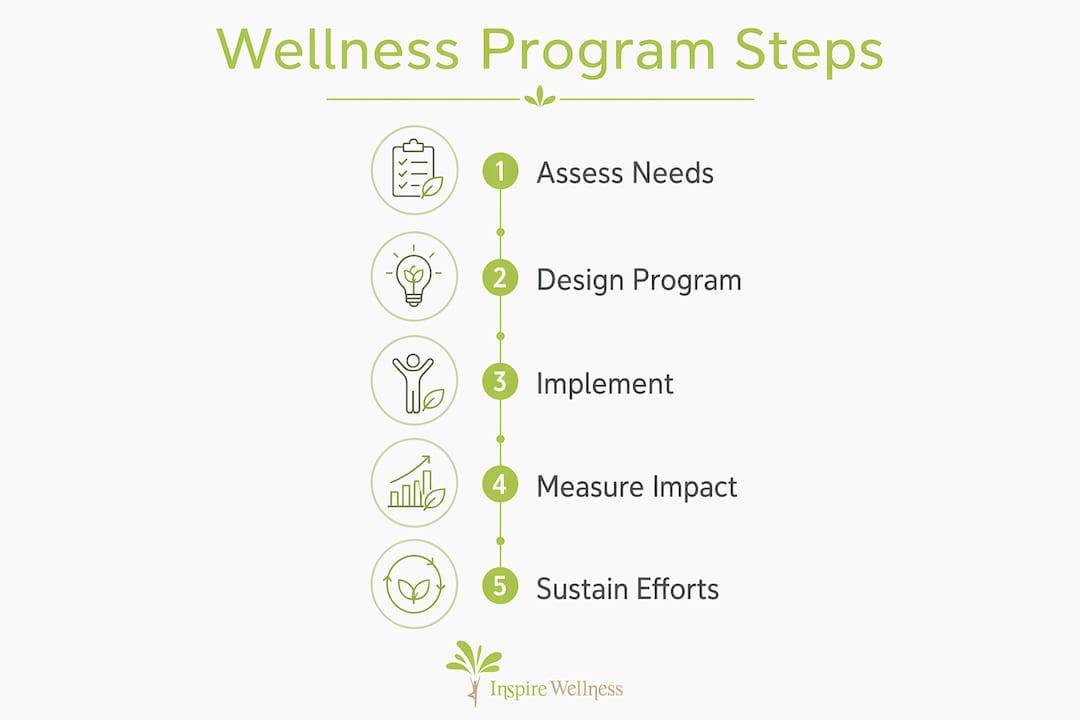
For a step-by-step rollout framework, the wellness initiatives guide for HR leaders from Inspire-wellness walks through each phase from needs assessment to program review.
How to maintain wellness program sustainability in a family business?
Sustainability is where most wellness programs in family firms break down. The first year runs on enthusiasm. Year two requires structure.
Transitioning to transparent self-funded health plans allows owners to reinvest savings into wellness perks and appreciation programs that reinforce the family culture employees value. This approach also reduces financial tension between owners and staff by making health plan costs visible and understandable. Trust increases when employees see where the money goes.
Keeping a program alive long-term requires these practices:
- Annual program review. Revisit goals, metrics, and employee feedback every year. Adjust offerings based on what employees actually use.
- Open mental health communication. Normalize conversations about stress and burnout by including mental health topics in team meetings and manager training. Reducing stigma is a process, not a single workshop.
- Reinvest savings visibly. When self-funded models generate savings, communicate that reinvestment to employees. Announce new wellness perks as a direct result of the cost management. That transparency builds loyalty.
- Protect work-life balance actively. Set and enforce boundaries around after-hours communication. Work-life balance in family firms often suffers because the owners themselves model overwork. The behavior at the top sets the norm for everyone else.
- Embed wellness into onboarding. New employees should learn about wellness resources on their first day. This signals that wellbeing is part of the company’s identity, not an optional add-on.
Wellness in family businesses must be structured as business infrastructure, not perks. That framing shift changes how owners budget for it, how managers communicate it, and how employees experience it. For practical ideas on keeping employees healthy year-round, consistent environmental and behavioral supports matter as much as formal programs.
Key Takeaways
Effective family business employee wellness requires cultural fairness, structured program design, and visible leadership commitment as its three non-negotiable foundations.
| Point | Details |
|---|---|
| Culture precedes programs | Fix inequity and communication gaps before launching any wellness initiative. |
| Virtual care expands access | Telehealth removes enrollment barriers for firms with fewer than 1,500 employees. |
| Measure participation, not just cost | Track absenteeism, engagement scores, and retention as primary success metrics. |
| Cross-training builds resilience | Training non-family employees for leadership roles reduces disruption and signals meritocracy. |
| Self-funded models sustain investment | Transparent health plans free up funds to reinvest in employee appreciation and wellness perks. |
What I’ve learned about wellness in family firms
Working with family businesses on wellbeing programs, I’ve noticed one pattern that almost always predicts failure: the owner treats wellness as a gift to employees rather than a system the business depends on. That framing creates a fragile program. When budgets tighten, gifts get cut. Systems get protected.
The most successful family firms I’ve seen treat occupational wellbeing the same way they treat financial controls. They document it, measure it, and hold leaders accountable for it. The family members who lead these companies also participate visibly in wellness activities, not as a performance, but because they genuinely believe the business performs better when people are healthy. That belief is contagious.
The hardest conversation I’ve had with family business owners is about nepotism perception. Most owners don’t see it happening. Their non-family employees see it constantly. Wellness programs that ignore this gap will always underperform, because employees who feel overlooked don’t engage with benefits, no matter how good those benefits are. Solving the fairness problem is not a detour from wellness strategy. It is the strategy.
The legacy of a family business is not just financial. It’s the culture that outlasts the founding generation. Wellness, built correctly, becomes part of that legacy. It tells every employee, family member or not, that this company takes care of its people. That message is worth more than any single benefit you can offer.
— Neelam
Inspire-wellness programs for family business employee care
Family businesses face wellness challenges that standard corporate programs simply aren’t built for. Inspire-wellness designs customized employee wellbeing programs that address the specific cultural and operational dynamics of family-owned companies, from building meritocratic wellness policies to delivering mental health support and resilience training across mixed teams.
Whether you are building your first wellness program or strengthening an existing one, Inspire-wellness offers the frameworks and coaching expertise to make it work. Explore the corporate wellness guide to see how a structured approach to employee health drives measurable results. You can also review the wellness program benefits guide to build a clear business case for your investment.
FAQ
What is family business employee wellness?
Family business employee wellness is the practice of designing and delivering health and wellbeing programs that address both family and non-family employees within a family-owned company. It covers physical health, mental health, emotional resilience, and the cultural conditions that support all three.
Why do wellness programs fail in family businesses?
Wellness programs most often fail when the underlying culture is perceived as unfair. Perceived inequity between family and non-family staff drives disengagement and turnover, which undermines even well-designed programs.
How should a family business measure wellness program success?
Track participation rates, absenteeism, and employee engagement scores rather than focusing only on cost. Setting specific targets, such as reducing stress-related absences by 15%, gives you a clear benchmark to evaluate progress.
What role does leadership play in employee wellness?
Leadership visibility is critical to program success. Employees engage at significantly higher rates when owners and senior family members actively participate in and champion wellness initiatives.
How can small family businesses afford wellness programs?
Virtual care and telehealth options make quality wellness support accessible without the cost of onsite facilities. Transitioning to self-funded health plans also frees up funds to reinvest directly into employee wellness and appreciation programs.