Employee wellness recognition ideas are deliberate strategies that reward healthy behaviors, celebrate wellbeing milestones, and signal to employees that their health matters as much as their output. The industry term for this practice is wellness incentive design, and it sits at the intersection of recognition theory and behavioral health science. Programs like Mental Health America’s Bell Seal for Workplace Mental Health represent the leading standard for employer recognition in this space, while everyday perks like gym memberships and meditation app subscriptions form the practical backbone of most programs. When recognition is tied to wellness, employee engagement deepens and the conditions for a genuine wellness culture take root.
1. Effective employee wellness recognition ideas HR leaders can implement
The most effective recognition ideas for wellness combine tangible perks, social acknowledgment, and structured incentives. Each approach serves a different motivational driver, so layering them produces stronger results than relying on any single method.
Tangible wellness perks
Wellness perks like gym memberships, meditation app subscriptions such as Calm or Headspace, and ergonomic equipment communicate care for the whole person rather than just performance. These perks function as ongoing recognition tools because employees encounter them daily, reinforcing the message that the organization invests in their health continuously. Personalized wellness kits, which might include a fitness tracker, a journal, and a healthy snack selection, add a human touch that generic gift cards cannot replicate.
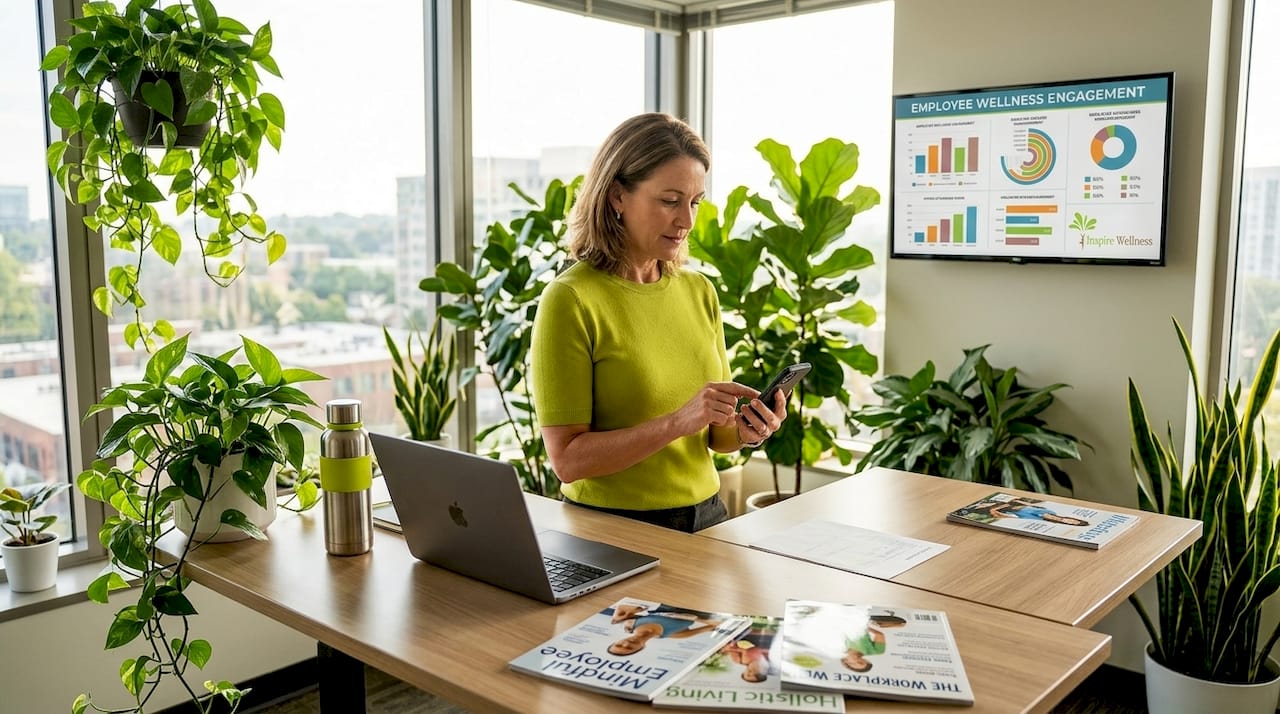
Group fitness challenges and wellness breakfasts
Group fitness challenges, such as step-count competitions tracked through platforms like Virgin Pulse or Fitbit Health Solutions, create shared momentum and peer accountability. Wellness breakfasts, where the organization provides healthy food and a brief mindfulness session before the workday begins, combine recognition with habit formation. These formats work particularly well for teams that are skeptical of formal wellness programs because participation feels social rather than mandated.
Digital recognition and spot bonuses
Digital badges and internal spotlights celebrating wellness progress are low-cost and highly visible. Platforms like Workhuman and Bonusly allow managers to award spot bonuses tied to wellness achievements, such as completing a mental health module or hitting a hydration goal for a month. Public acknowledgment on a company intranet or Slack channel amplifies the motivational effect because recognition becomes a social event, not a private transaction.
Ergonomic upgrades and personalized kits
Ergonomic upgrades, including standing desks, lumbar support chairs, and blue-light-blocking glasses, serve as lasting recognition artifacts. Unlike a one-time bonus, an ergonomic workstation reminds employees of the organization’s commitment every time they sit down. Pairing these upgrades with a personalized wellness kit at onboarding or during a wellness milestone creates a memorable recognition moment.
Pro Tip: Start with two or three recognition methods before building a full platform. Overcomplicating the program early leads to low adoption and high administrative cost.
2. How to embed wellness recognition into workplace culture sustainably
Sustainable wellness recognition is not a campaign. It is a daily operating norm, and the difference between the two determines whether programs survive beyond the first quarter.
Embedding wellness interventions into daily work is measurably more effective than stand-alone programs that rely purely on incentives. McKinsey’s research confirms that manager and leadership modeling is the mechanism that makes this work. When a senior leader publicly takes a mental health day or joins a team walking challenge, the behavior signals permission for everyone else to prioritize their wellbeing.
Here are four cultural integration strategies that move wellness recognition from event to environment:
-
Build peer-to-peer recognition channels. Dedicate a Slack channel or Microsoft Teams thread specifically for wellness shout-outs. Encourage employees to recognize colleagues who took a lunch break away from their desk, completed a mindfulness session, or supported a teammate through a stressful week. Social and peer-to-peer recognition consistently drives greater ongoing engagement than top-down awards alone.
-
Replace wellness weeks with monthly micro-moments. A single annual wellness week creates a spike in participation followed by a long plateau. Monthly wellness awards, rotating themes such as sleep health in January and stress reduction in March, and weekly manager check-ins sustain momentum across the full year.
-
Create a physical recognition wall. A wellness recognition wall in a common area, updated monthly with photos, milestones, and team achievements, makes progress visible and tangible. Digital equivalents on an intranet homepage serve remote teams equally well.
-
Align leadership on wellness values explicitly. Culture must evolve continuously to reflect workforce needs, and static culture risks devaluing wellness efforts over time. HR leaders should schedule quarterly leadership alignment sessions where wellness metrics, participation rates, and employee feedback are reviewed together with senior management.
Pro Tip: Ask managers to mention one wellness win in every team meeting. This takes less than 60 seconds and normalizes wellness as a topic of professional conversation.
3. Perks vs. incentives vs. recognition programs: which approach works best?
These three categories are often used interchangeably, but they operate through different mechanisms and suit different organizational contexts.
| Approach | How it works | Cost range | Best for | Limitation |
|---|---|---|---|---|
| Tangible perks | Ongoing benefits like gym access or ergonomic equipment | Medium to high | Retention and daily reinforcement | Does not reward specific behaviors |
| Participation incentives | Rewards tied to joining activities, not outcomes | Low to medium | Early-stage programs with low baseline engagement | Incentive evidence is limited; typical amounts ranged from $5 to $150 |
| Outcome-based incentives | Rewards tied to measurable health results | Medium to high | Mature programs with strong data infrastructure | Risk of penalizing employees with chronic conditions |
| Social recognition programs | Public acknowledgment, badges, spotlights | Low | Culture building and peer engagement | Requires consistent manager participation |
| Structured recognition frameworks | External certifications like Bell Seal | Low to medium | Leadership alignment and program credibility | Requires time investment for application |
The research is instructive here. 70% of worksite wellness studies offered incentives, yet only two evaluated their actual impact on participation and health outcomes. This gap between prevalence and evidence means HR leaders should treat incentives as a supplement to culture rather than a substitute for it. Participation-based incentives work well in the early stages of a program, while outcome-based incentives become appropriate once employees trust the program and data systems are reliable enough to measure results fairly.
Social recognition programs carry the lowest cost and the highest cultural return when managers participate consistently. Structured frameworks like Bell Seal Insights add a layer of external validation that helps secure leadership buy-in, particularly in organizations where wellness budgets face scrutiny.
4. Practical steps for designing and launching a wellness recognition program
HR teams that try to build a complete wellness recognition platform in the first month consistently face low adoption and high dropout rates. The most durable programs start small, measure carefully, and scale deliberately.
-
Start with walking clubs and lunch-and-learns. Simple onsite activities like walking clubs and lunch-and-learns are inexpensive, require minimal administration, and generate early participation wins that build program credibility. The CDC’s Worksite Health Scorecard, which uses 154 structured questions, provides a reliable baseline assessment before any formal program launches.
-
Use benchmarking tools to structure development. Bell Seal Insights produces tailored reports that highlight strengths and gaps in workplace mental health strategies. These reports give HR leaders a research-validated roadmap rather than a blank page, which accelerates the design process and produces recommendations that leadership trusts.
-
Pilot incentives before scaling them. Run a 90-day pilot with one team or department before rolling out incentives organization-wide. Track participation rates and qualitative feedback separately from health outcomes. More complex recognition systems can be built once participation is stable and the program has demonstrated value.
-
Train managers as daily wellness champions. HR campaigns reach employees periodically. Managers reach them daily. Equip managers with a simple toolkit: a list of recognition phrases, a monthly wellness theme, and a standing agenda item for team wellbeing check-ins. This approach distributes the recognition function across the organization rather than concentrating it in HR.
-
Measure participation separately from outcomes. Confusing high participation with meaningful health improvement is one of the most common mistakes in wellness program evaluation. Track both metrics independently and report them to leadership with honest interpretation.
Pro Tip: Tie your first wellness recognition moment to an existing event, such as a team offsite or a company anniversary, to reduce the activation energy required for launch.
Key takeaways
The most effective employee wellness recognition programs combine continuous cultural integration, layered incentive structures, and manager-led daily reinforcement rather than relying on periodic campaigns or standalone perks.
| Point | Details |
|---|---|
| Start simple, then scale | Walking clubs and lunch-and-learns build participation before complex platforms are introduced. |
| Layer recognition methods | Combine tangible perks, digital badges, and peer shout-outs to address different motivational drivers. |
| Embed recognition in daily routines | Manager-led wellness moments and monthly themes outperform annual wellness weeks. |
| Treat incentives as supplements | Evidence on incentive impact is limited; culture and leadership modeling carry more weight. |
| Use external frameworks for credibility | Tools like Bell Seal Insights align leadership and provide research-validated program direction. |
What I’ve learned about wellness recognition after years in this field
Most organizations launch wellness recognition programs with genuine enthusiasm and then quietly abandon them within six months. The reason is almost never budget. It is almost always that the program was designed as a campaign rather than a cultural commitment.
What I find consistently true is that the organizations with the most engaged wellness programs are not the ones with the biggest incentive budgets. They are the ones where a senior leader visibly participates, where managers mention wellness in ordinary conversations, and where recognition happens in small, frequent moments rather than grand annual events. The HR role in workplace wellness is less about administering programs and more about shaping the conditions under which those programs can thrive.
The other pattern I see regularly is the overvaluation of outcome-based incentives. Rewarding employees for achieving specific health metrics sounds rigorous, but it often penalizes people with chronic conditions or genetic predispositions that no wellness program can address. Participation-based recognition, which rewards showing up and engaging rather than achieving a target number, is more equitable and produces stronger long-term culture.
My honest recommendation: pick one recognition method, do it consistently for 90 days, and measure how it changes the conversation about wellness in your organization. That data will tell you more than any benchmarking report.
— Neelam
How Inspire-wellness helps HR leaders build recognition programs that last
At Inspire-wellness, we work with HR leaders and business teams across the UAE and beyond to design wellness recognition strategies that are grounded in behavioral science and built for real organizational contexts. Whether you are starting from scratch or looking to strengthen an existing program, our workplace wellbeing improvement guide gives you a structured, evidence-informed process for building recognition into your culture rather than bolting it on as an afterthought. For managers who need practical, day-to-day tools, our wellbeing tips for managers resource provides ready-to-use frameworks for recognizing and supporting employee wellness at the team level. If you are ready to move from intention to impact, we are here to support that process.
FAQ
What are the most effective employee wellness recognition ideas?
The most effective ideas combine tangible perks like gym memberships and ergonomic equipment with social recognition such as digital badges, peer shout-outs, and public spotlights. Layering participation-based and outcome-based incentives as programs mature produces the strongest engagement results.
How do you build a wellness culture through recognition?
Sustainable wellness culture requires embedding recognition into daily routines through manager modeling, monthly wellness themes, and peer-to-peer acknowledgment channels rather than relying on periodic wellness weeks or one-time events.
Are wellness incentives actually effective?
Evidence is mixed. Research shows that 70% of worksite wellness programs offered incentives, but very few rigorously evaluated their impact on health outcomes. Incentives work best as a supplement to a strong wellness culture, not as a replacement for it.
How should HR teams start a wellness recognition program?
Start with simple, low-cost activities like walking clubs and lunch-and-learns to build participation, then use benchmarking tools like the CDC’s Worksite Health Scorecard or Bell Seal Insights to structure more formal program development as engagement grows.
What role do managers play in wellness recognition?
Managers are the most important daily touchpoint for wellness recognition. When managers model healthy behaviors, mention wellness in team meetings, and recognize employee wellbeing efforts in real time, participation rates and cultural adoption increase significantly.