
Collaborative teams are defined as groups of people working toward shared goals with clear communication, mutual accountability, and collective ownership of outcomes. Organizations that invest in building these teams see 25% higher productivity and 21% greater profitability than their less collaborative peers. That gap is not a coincidence. It reflects the compounding effect of people who trust each other, share information freely, and make decisions together. For HR professionals and business leaders in the UAE, where workforce diversity and rapid growth create both opportunity and complexity, understanding why develop collaborative teams is not a soft skill question. It is a business performance question.
Why develop collaborative teams: the core business case
The benefits of teamwork extend well beyond morale. Collaboration is a commercial necessity driven by global risks, social polarization, and economic pressure. Organizations that treat it as optional leave measurable value on the table.
Here is what high-collaboration organizations consistently gain:
- Higher output with fewer resources. When teams share knowledge and coordinate well, they reduce duplication and accelerate delivery. The productivity gains linked to collaboration are not theoretical. They show up in project timelines, output quality, and cost per result.
- Better decisions, faster. Diverse teams surface more options and catch blind spots that homogenous groups miss. When people feel safe to speak up, the group makes more informed choices with stronger buy-in from everyone involved.
- Greater innovation. Teams that combine different expertise and perspectives generate ideas that no single person would reach alone. This is especially relevant in the UAE, where multinational workforces bring a wide range of professional and cultural knowledge.
- Stronger employee engagement and retention. People who feel connected to their team and valued for their contribution stay longer. Engagement is not just a wellbeing metric. It directly affects absenteeism, turnover cost, and institutional knowledge retention.
- Reduced silos and duplicated effort. When departments collaborate across functions, they stop solving the same problems independently. That alignment frees up time and budget for work that actually moves the organization forward.
The importance of collaboration becomes clearest when you look at what its absence costs. Siloed teams make slower decisions, repeat each other’s mistakes, and lose talent to organizations where people feel more connected.
What leadership behaviors build effective collaboration?
Leadership is the single biggest variable in whether collaboration takes root or stays a talking point. Leaders who balance task orientation with relationship nurturing create empowered teams that innovate effectively. That balance is harder than it sounds.
Modeling curiosity, care, and courage
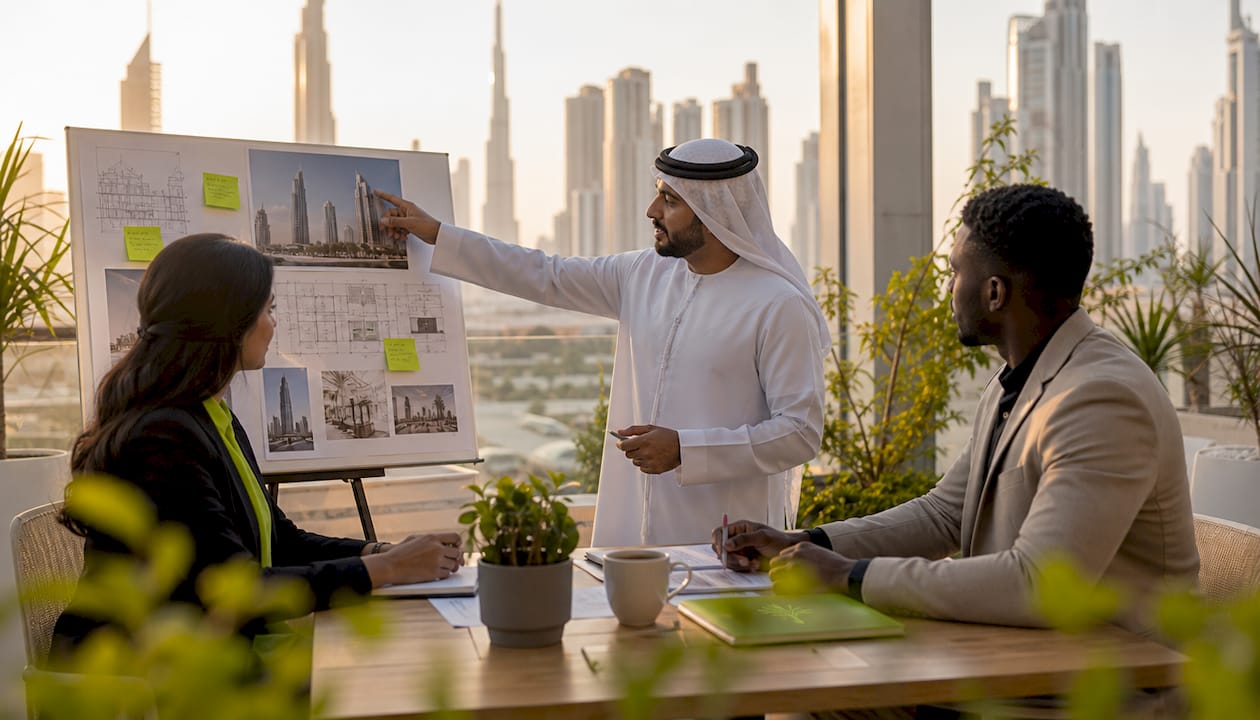
Collaborative leadership is defined by three qualities: curiosity, care, and courage. Curiosity means asking questions before drawing conclusions. Care means treating team members as whole people, not just task executors. Courage means naming difficult truths and welcoming disagreement rather than suppressing it. Leaders who practice all three create the psychological safety that makes genuine collaboration possible.
Combining role clarity with task flexibility
Sharp role definitions paired with flexibility on approach give teams the structure they need without removing the autonomy that drives ownership. When people know exactly what they are responsible for but have room to decide how they get there, they engage more deeply and take more initiative. This is one of the most underused levers in team design.
Building a gift culture
Ambidextrous leadership requires leaders to drive task efficiency while also cultivating a “gift culture,” where people share knowledge, support, and resources without expecting a transactional return. This kind of culture does not emerge on its own. Leaders build it by modeling generosity, recognizing collaborative behavior, and making it safe to ask for help.
- Give meaningful feedback weekly. Employees who receive weekly meaningful feedback report up to 70% engagement, compared to 22–26% for those who do not. That difference in engagement translates directly into collaboration quality.
- Address conflict early and constructively. Unresolved tension does not disappear. It goes underground and erodes trust.
- Invest in relationship-skills training. Communication, active listening, and constructive disagreement are learnable skills, not fixed personality traits.
Pro Tip: Before your next team meeting, ask one open question that has no single right answer. Watch who speaks, who stays silent, and what that tells you about psychological safety in your group.
How can UAE organizations design sustainable collaborative cultures?
Building a collaborative culture in the UAE requires more than good intentions. The workforce is among the most diverse in the world, and that diversity is a genuine asset. It also creates real friction if left unmanaged.
70% of people globally hesitate to trust colleagues with different values or backgrounds. In a UAE workplace where teams may include people from 20 or more nationalities, that hesitancy is a daily operational challenge. Leaders who ignore it pay for it in slower collaboration, higher conflict, and weaker team cohesion.
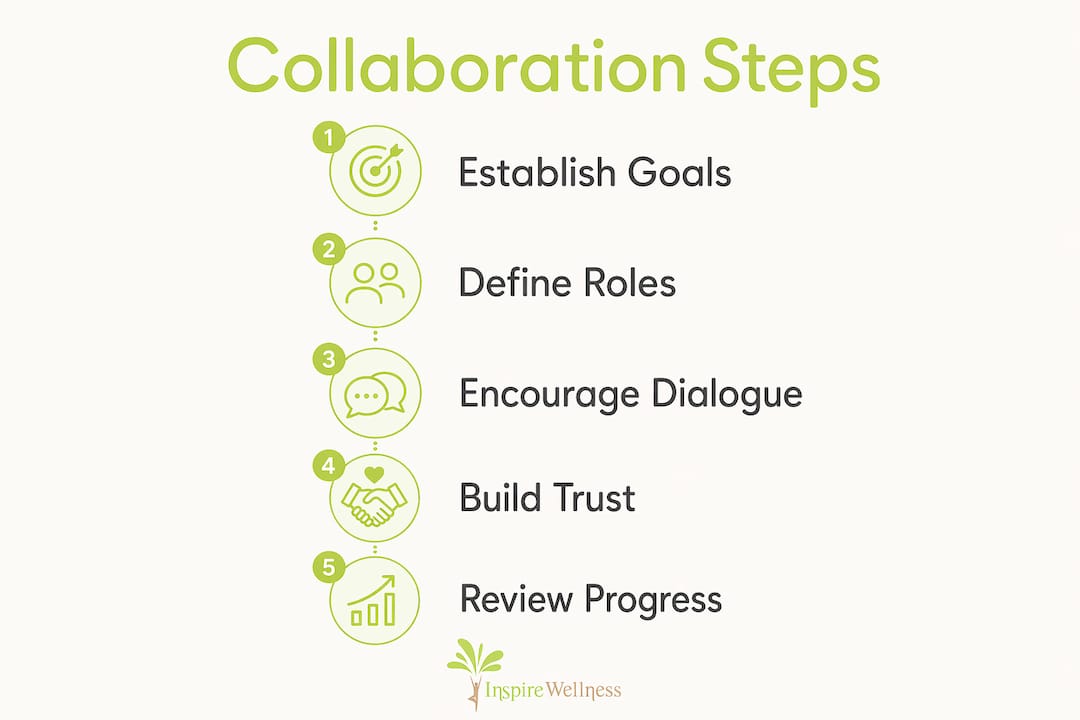
Here is a practical sequence for designing collaboration into your organization:
- Audit your current collaboration patterns. Map where decisions get made, where information gets stuck, and which teams rarely interact. You cannot fix what you have not measured.
- Design intentional rituals. Collaboration tools require rituals and intentional design to be effective. Weekly cross-functional check-ins, shared project retrospectives, and structured peer feedback sessions all create the habits that sustain collaboration over time.
- Run a pilot program. Choose one team or department to test your collaboration approach. Measure outcomes after 90 days before scaling. This reduces risk and builds an internal case study you can use to gain broader buy-in.
- Invest in leadership development. Managers need coaching on how to enhance team collaboration before they can model it for their teams. Training without follow-up coaching rarely changes behavior.
- Align rewards with collective outcomes. If your performance review system only rewards individual achievement, you are working against your own collaboration goals. Recognize and reward team-level results explicitly.
- Balance remote and in-person connection. Hybrid teams need structured in-person time for relationship building. Digital tools handle task coordination well. They do not replace the trust that forms through shared physical experience.
Pro Tip: When launching a collaboration initiative, identify two or three respected informal leaders in your organization and involve them early. Their peer influence accelerates adoption faster than any top-down mandate.
For UAE organizations building this from the ground up, Inspire-wellness offers wellbeing strategies for UAE workplaces that integrate team culture design with employee health outcomes.
What challenges commonly block collaboration, and how do you fix them?
Knowing the advantages of group work does not automatically remove the barriers. The most common obstacles are predictable, and each has a practical response.
Assembling diverse experts increases complexity which can hinder collaboration without intentional relationship-building and leadership. More talent in the room does not mean better teamwork. It often means more competing priorities, communication styles, and assumptions about how work should get done.
Teams larger than 20 members need structural investments in relationship practices and explicit skills training to sustain performance. Size creates distance. Without deliberate design, large teams fragment into informal subgroups that stop sharing information across the whole.
“Team cohesiveness must be managed carefully to prevent groupthink and internal resistance to organizational change. Cohesiveness reduces absenteeism but may lead to silos if unmanaged. The goal is porous, aligned teams that remain open to broader organizational goals.”
The groupthink risk is real and often overlooked. Teams that become very close can start filtering out dissenting information to protect group harmony. Leaders counter this by actively inviting challenge, rotating team membership periodically, and rewarding people who raise uncomfortable questions.
Collaboration overload is another underappreciated problem. When every decision requires group input and every meeting includes everyone, people burn out and disengage. The fix is distributive decision-making: define clearly which decisions require group input and which can be made by one person with notification to others. That clarity protects both collaboration quality and individual energy.
For professional growth in complex team environments, mid-level leaders benefit from explicit coaching on how to read group dynamics, manage conflict, and maintain momentum without micromanaging.
Key Takeaways
Developing collaborative teams is the most direct path to higher productivity, stronger engagement, and sustained organizational performance in complex, diverse workplaces.
| Point | Details |
|---|---|
| Productivity and profit gains | High-collaboration organizations see 25% higher productivity and 21% greater profitability than peers. |
| Leadership drives culture | Curiosity, care, and courage in leaders create the psychological safety that makes real collaboration possible. |
| Trust barriers are real | 70% of people globally hesitate to trust colleagues with different backgrounds, making intentional culture design non-negotiable in UAE workplaces. |
| Feedback fuels engagement | Weekly meaningful feedback lifts employee engagement to 70%, directly improving collaboration quality. |
| Manage cohesion carefully | Tight team bonds reduce absenteeism but can create silos; keep teams porous and aligned to broader organizational goals. |
What I have learned about building collaboration that actually lasts
Collaboration is engineered, not assembled
After working with leadership teams across the UAE and beyond, the pattern I see most often is this: organizations hire talented, experienced people, put them in a room together, and call it a team. Then they wonder why collaboration is not happening.
Genuine collaboration does not emerge from proximity or shared job titles. It is built through deliberate choices about how people communicate, how conflict gets handled, and how leaders model the behavior they want to see. The organizations that get this right treat collaboration as a design problem, not a personality problem.
What surprises most leaders is how much the structural details matter. Role clarity, feedback rhythms, decision rights, and even meeting formats all shape whether people feel safe enough to collaborate authentically. When those structures are absent or inconsistent, even the most willing team members default to self-protection.
The UAE context adds a layer that many global frameworks miss. Navigating a workforce where cultural norms around hierarchy, directness, and relationship-building vary widely requires leaders who are genuinely curious about difference, not just tolerant of it. That curiosity is the foundation. Without it, diversity becomes friction rather than fuel.
The leaders I have seen build the strongest collaborative cultures share one habit: they invest in workplace wellbeing for their teams as seriously as they invest in technical skills. They understand that people who feel well, psychologically safe, and genuinely valued are the ones who show up fully and collaborate without reservation.
— Neelam
How Inspire-wellness supports HR leaders building collaborative teams
HR leaders in the UAE who want to move from intention to measurable results need more than frameworks. They need practical tools, coaching support, and programs designed for the realities of diverse, high-pressure workplaces.
Inspire-wellness works with organizations across Dubai and the UAE to build the conditions that make collaboration sustainable. Our workplace wellbeing improvement guide gives HR professionals a proven process for connecting team health to organizational performance. We also offer team building programs designed to build trust, communication, and shared purpose across diverse teams. If you are ready to build a culture where collaboration is the norm rather than the exception, we are here to support that work with you.
FAQ
Why develop collaborative teams in the first place?
Collaborative teams produce 25% higher productivity and 21% greater profitability than less collaborative organizations. They also improve decision quality, employee engagement, and retention.
What is the biggest barrier to collaboration in UAE workplaces?
Trust across cultural and value differences is the primary barrier. Research shows 70% of people globally hesitate to trust colleagues with different backgrounds, making intentional culture design critical in diverse UAE teams.
How does leadership affect team collaboration?
Leaders who model curiosity, care, and courage create psychological safety, which is the foundation for genuine collaboration. Without that safety, people withhold ideas and avoid productive conflict.
How large can a team be before collaboration breaks down?
Teams larger than 20 members require structural investments in relationship practices and skills training to maintain effective collaboration. Without deliberate design, large teams fragment into informal subgroups.
How does employee feedback connect to collaboration quality?
Employees who receive meaningful weekly feedback report up to 70% engagement, compared to 22–26% without it. Higher engagement directly improves the quality and consistency of team collaboration.