What are the top luxury HR wellness perks for 2026?
Premium employee wellness programs have moved well past gym memberships and fruit baskets. Today’s most competitive organizations are offering luxury HR wellness perks that combine personalized health experiences, physician-led care, and lifestyle support that employees genuinely value. Here is a clear picture of what the leading options look like right now.
- Flexible and remote work arrangements that give employees genuine control over when and where they work
- Sabbatical leave and extended wellness days that protect mental health and prevent long-term burnout
- Family-friendly policies and extra paid time off that support caregivers and parents at every stage
- Employee wellness stipends and reimbursement programs covering everything from nutrition coaching to spa treatments
- Team wellness competitions and social wellbeing challenges that build culture while improving health habits
- Personalized concierge health programs with physician-led, adaptive care tailored to each individual
- Beauty and recovery wellness experiences including premium skincare consultations and restorative therapies
- Virtual reality meditation and mindfulness suites for on-demand mental recovery
- Financial wellness coaching addressing the full spectrum of employee wellbeing
- Bespoke executive health immersions combining luxury hospitality with medical expertise
- Inspire-wellness corporate wellbeing programs built on behavioral science, resilience training, and personalized coaching frameworks
Each of these perks works best when it is selected deliberately, matched to your workforce’s actual needs, and supported by a measurement framework that shows real impact over time.
Table of Contents
- How to design and deliver high-end wellness perks your employees will actually use
- Why luxury wellness perks produce measurable business results
- How HR leaders can implement luxury wellness perks with confidence
- Inspire-wellness brings expert-backed wellbeing to your workforce
- Key Takeaways
How to design and deliver high-end wellness perks your employees will actually use
The difference between a luxury perk that lands and one that collects dust is specificity. Generic benefits feel like afterthoughts. Bespoke wellness experiences feel like genuine investment in the person, not just the role.
Flexible work and adjustable hours
Flexible scheduling is the foundation of any credible wellbeing strategy. When employees can align their work hours with their natural energy rhythms, productivity tends to rise and stress tends to fall. The most forward-thinking organizations go beyond standard remote-work policies to offer asynchronous schedules, four-day work weeks for high performers, and location flexibility that allows employees to work from wellness retreats or co-working spaces abroad. The key is building flexibility into the employment contract itself, not treating it as a favor granted case by case.

Sabbatical leave and extended wellness days
A sabbatical is one of the most powerful signals an organization can send: we trust you, and we want you to come back restored. Paid sabbaticals of four to twelve weeks, offered after a defined tenure milestone, give employees the space to pursue personal growth, travel, or simply rest without financial anxiety. Shorter wellness days, distinct from standard sick leave, serve a different purpose. They normalize proactive mental health care rather than reactive recovery, which shifts the organizational culture in a meaningful direction.
Family-friendly policies and extra paid time off
Parental leave that goes beyond the legal minimum, backup childcare stipends, and school-event flexibility are perks that employees in their thirties and forties rank among the most valued benefits available. Research on inclusive benefits consistently shows that family-supportive policies drive loyalty more reliably than compensation increases alone. Offering ten to fifteen additional paid days per year, structured as a wellness bank employees can draw from freely, removes the friction of requesting time and signals genuine trust.
Employee wellness stipends and reimbursement programs
A wellness stipend of $1,500–$3,000 per year, administered through a flexible spending platform, gives employees the freedom to invest in what actually matters to them: a Pilates membership, a nutrition consultation, a meditation app subscription, or a massage series. The reimbursement model outperforms employer-selected perks because it respects individual difference. One employee’s recovery is another’s rock climbing. Stipend programs also generate utilization data that HR can use to refine future benefit design.

Pro Tip: Set up your wellness stipend through a platform that categorizes spending automatically. The anonymized data will show you which wellness categories your workforce actually values, giving you a sharper foundation for next year’s benefit decisions.
Team wellness competitions and social engagement
Structured wellness challenges, when designed thoughtfully, create genuine community. Step challenges, hydration goals, sleep tracking competitions, and mindfulness streaks give teams a shared focus that is entirely separate from work deliverables. The social dimension matters as much as the health outcome. Workplace wellbeing events that combine friendly competition with celebration tend to produce the strongest engagement, particularly in hybrid and distributed teams. Pair the competition with recognition, not just prizes, and the cultural impact deepens.
Personalized concierge health programs
This is where luxury HR wellness perks genuinely separate themselves from standard corporate benefits. Physician-led concierge care tailored to each executive’s changing health and performance needs delivers continuous, adaptive support rather than a one-time assessment. These programs typically include annual comprehensive health screenings, direct access to a primary care physician, specialist referral coordination, and personalized health plans that evolve with the individual. The investment is higher, but the retention signal it sends to senior talent is proportionally stronger.
Beauty and recovery wellness experiences
High-net-worth employees increasingly view their physical recovery as a performance tool, not a luxury. Partnerships with premium wellness brands bring that philosophy into the workplace. Dr. Barbara Sturm’s residency at Claridge’s spa is a strong example of how luxury hospitality and results-based skincare can combine into a bespoke, anti-inflammatory health program that employees experience as genuinely restorative. For HR leaders, this translates into vendor partnerships with premium skincare clinics, recovery suites, or IV therapy providers that employees can access as part of their benefits package.
Virtual reality meditation and financial wellness coaching
Modern wellness rewards increasingly include technology-enhanced experiences alongside traditional benefits. VR meditation suites, available through dedicated headsets in wellness rooms or as home-use subscriptions, offer employees an immersive mental reset that standard mindfulness apps cannot replicate. Financial wellness coaching, addressing debt management, investment basics, and retirement planning, rounds out a truly whole-person approach. The Federal Reserve’s data on household financial wellbeing makes clear that financial stress is a primary driver of reduced productivity and presenteeism, which means addressing it directly is both a human and a business priority.
Bespoke executive health immersions
For your most senior leaders, a multi-day executive health immersion at a luxury wellness destination delivers a depth of physical and mental restoration that no single perk can match. These programs combine medical assessments, personalized nutrition, movement therapy, and stress recovery protocols in an environment designed entirely around the participant’s needs. Dior’s High Wellness philosophy demonstrates how integrative programs rooted in technology and social wellness can be made unique to each location and individual, moving well beyond passive pampering into genuine health optimization.
Why luxury wellness perks produce measurable business results
The business case for premium employee wellness programs is no longer a matter of debate. The data points in one consistent direction: organizations that invest in high-touch wellbeing support see meaningful returns in retention, productivity, and talent attraction.
A survey found that 44% of HR decision makers now rank wellbeing support as more important than salary for recruitment and retention, with the effect most pronounced in larger organizations competing for senior talent. That figure reflects a genuine shift in how the employment relationship is understood, not a passing trend.
The World Health Organization’s research on mental health investment found that every dollar invested in treatment for depression and anxiety yields a fourfold return in improved health and productivity. That ratio holds particular relevance for luxury wellness programs that include mental health support frameworks, because those frameworks address the conditions most likely to cause absenteeism and disengagement among high-performing employees.
The American Psychological Association’s work in America research reinforces this picture, showing that employees who feel their employer genuinely supports their wellbeing report significantly higher engagement, stronger organizational commitment, and lower intention to leave. For HR leaders designing a VIP employee wellness program, these findings provide a clear mandate: the investment in premium perks is not a cost center. It is a retention strategy with a measurable return.
Employee turnover carries a cost that organizations consistently underestimate. Research on the true cost of turnover shows that replacing a single employee can cost between 50% and 200% of their annual salary, depending on seniority and specialization. When luxury wellness perks reduce voluntary attrition by even a few percentage points among your highest earners, the financial case becomes straightforward.
How HR leaders can implement luxury wellness perks with confidence
Strategy matters as much as selection. The most thoughtfully chosen perks will underperform if they are rolled out without customization, measurement, or legal rigor.
Customizing perks to diverse employee needs
No single wellness perk serves every employee equally well. A bespoke wellness plan for a luxury HR environment starts with listening: pulse surveys, focus groups, and benefit utilization data all reveal what your workforce actually wants versus what HR assumes they want. Segment your population by life stage, role level, and location before designing the benefit menu. Senior executives may prioritize concierge medicine and executive health immersions, while mid-level managers may value flexible scheduling and family support most. Building a tiered benefit structure that addresses multiple segments simultaneously is the hallmark of a mature, high-touch wellness program.
Budget planning and cost-effectiveness
| Perk Category | Estimated Annual Cost per Employee | Primary ROI Driver |
|---|---|---|
| Wellness stipend | $1,500–$3,000 | Utilization flexibility, satisfaction |
| Concierge health program | $1,500–$3,000 | Retention, reduced absenteeism |
| Executive health immersion | — | Senior talent retention |
| VR meditation suite (shared) | $200 | Mental health, productivity |
| Financial wellness coaching | — | Reduced presenteeism |
| Flexible work infrastructure | — | Engagement, talent attraction |
Cost-effectiveness analysis should account for avoided turnover costs, reduced sick days, and productivity gains, not just the line-item benefit expense. Bureau of Labor Statistics data on employer compensation costs provides a useful baseline for understanding how wellness investment compares to total compensation spend across industries.
Pro Tip: When building your business case for luxury wellness perks, calculate the cost of replacing your top three performers. That single figure, compared against the annual cost of a premium wellness program, usually closes the internal debate.
Measuring perk impact
Concierge wellness programs generate de-identified utilization reports that enable evidence-based health benefits decisions, giving HR leaders a clear view of which perks are being used, by whom, and with what health outcomes. Beyond utilization, track engagement scores before and after program launch, monitor voluntary attrition rates among program participants versus non-participants, and run annual wellbeing assessments using validated tools. The executive coaching and wellness integration framework from Inspire-wellness offers a structured approach to embedding measurement into the program design from day one, rather than retrofitting it after launch.
For remote and hybrid teams, digital engagement metrics, participation rates in virtual wellness events, and manager-reported team health indicators all contribute to a fuller picture of program impact.
Legal and compliance considerations
HIPAA compliance is non-negotiable when implementing high-end onsite clinics, concierge health partnerships, or any program that involves the collection of employee health data. Legal and ethical standards require strict data compartmentalization to prevent medical information from influencing employment decisions. Work with legal counsel to establish clear data governance policies before launching any physician-led program. Voluntary participation must be genuinely voluntary, incentive structures must comply with ADA and HIPAA wellness program regulations, and all vendor contracts should include explicit data security and confidentiality provisions.
Vendor selection for exclusive wellness perks requires a high-touch procurement process that goes beyond standard RFP procedures. Premium vendors often require chemistry meetings and brand standards alignment assessments before agreeing to a partnership. This is not bureaucracy. It is how you protect the cultural coherence of your wellness program and your organization’s reputation. Review the company wellness policy guidance from Inspire-wellness for a practical framework on transitioning from ad-hoc perks to a structured, adaptive wellness strategy.
Inspire-wellness brings expert-backed wellbeing to your workforce
When you are ready to move from a list of perks to a program that actually changes how your people feel and perform, Inspire-wellness offers something most benefit vendors cannot: a structured, behavioral-science-backed approach that integrates mental health support, resilience training, and personalized coaching into a single, coherent framework.
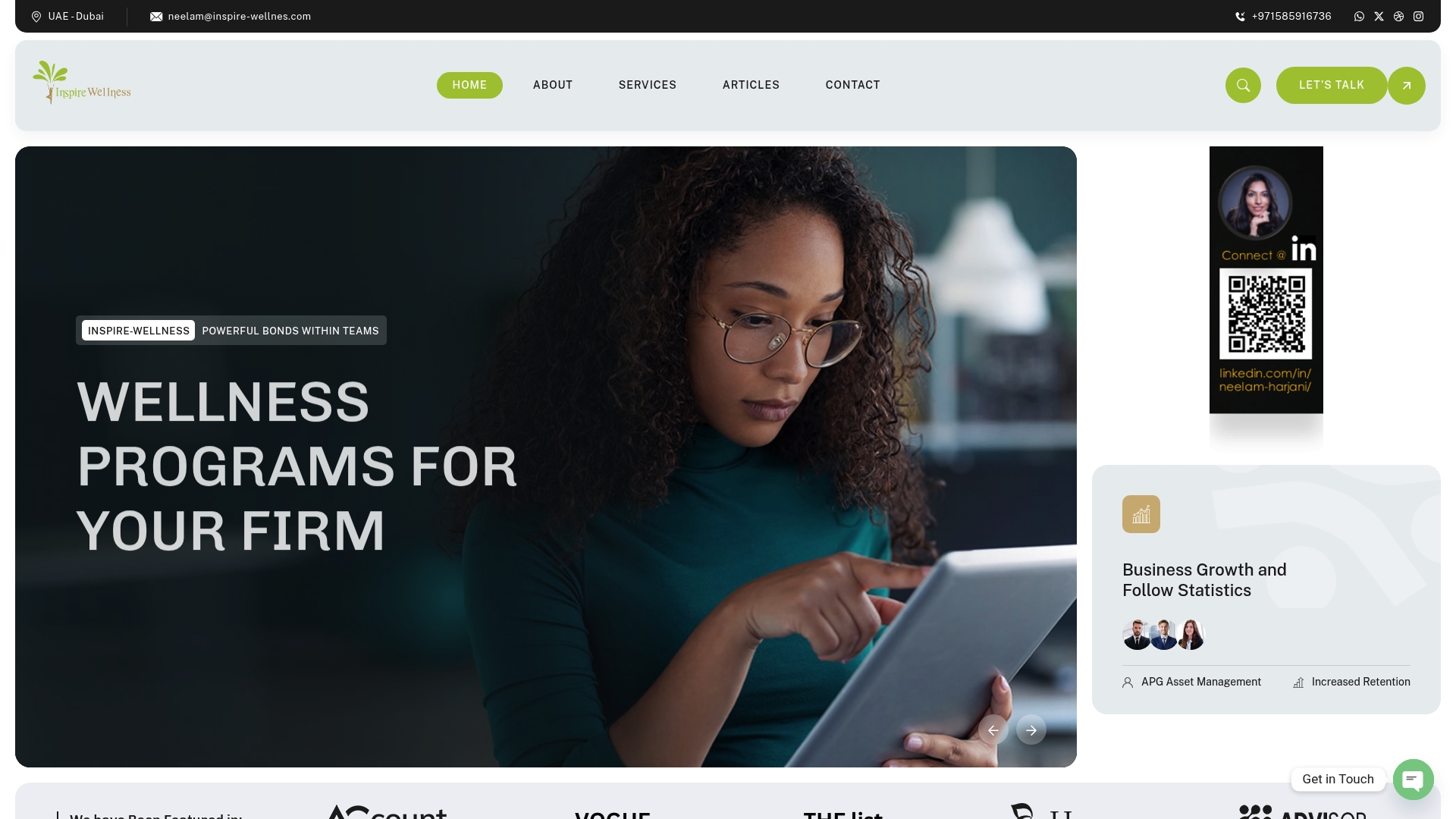
Where standard wellness vendors deliver a menu of disconnected services, Inspire-wellness builds a program architecture around your organization’s specific culture, workforce profile, and business goals. The Wellness Pyramid framework addresses energy management, emotional resilience, stress reduction, and collaboration in a sequence that produces compounding results over time, not a one-time engagement spike. For HR leaders who have invested in luxury workplace perks and want to ensure those perks are supported by a deeper wellbeing infrastructure, this is the natural next step.
Explore how Inspire-wellness can support your workforce through corporate wellbeing coaching designed for organizations that take employee health seriously. You can also review the wellness program benefits guide to understand exactly what a structured program delivers and how to present the business case internally.
Key Takeaways
Luxury HR wellness perks deliver their strongest returns when they are personalized, physician-led, legally sound, and supported by a measurement framework that connects health outcomes to business performance.
| Point | Details |
|---|---|
| Wellbeing outranks salary for many employers | 44% of HR decision makers now rank wellbeing support above salary for recruitment and retention. |
| Personalization drives utilization | Wellness stipends and tiered benefit menus outperform one-size-fits-all perks by respecting individual employee needs. |
| Legal compliance protects the program | HIPAA data compartmentalization and ADA-compliant incentive structures are required for any physician-led wellness offering. |
| Measurement turns perks into strategy | De-identified utilization data and attrition tracking connect wellness investment to measurable business outcomes. |
| Inspire-wellness provides the framework | Inspire-wellness combines behavioral science, resilience training, and personalized coaching to support luxury wellness programs with lasting impact. |