Behavioral health coaching is a client-centered, evidence-based process that helps individuals improve mental and emotional well-being through motivation, education, accountability, and structured support. Unlike therapy, it does not diagnose or treat clinical disorders. Instead, it focuses on building the skills, self-awareness, and resilience people need to make lasting, positive changes in how they think, feel, and behave. Coaches use approaches grounded in behavioral science, including motivational interviewing and goal-setting, to help clients align their daily actions with their deeper values and wellbeing goals.
The defining elements of behavioral health coaching include:
- A collaborative relationship where the client sets the direction
- Focus on self-awareness, emotional regulation, and personal growth
- Skill-building around coping, stress management, and resilience
- Empowerment toward autonomy rather than dependence on the coach
- Evidence-based techniques adapted to each person’s needs
For organizations, this approach offers a scalable way to support workforce mental health before challenges escalate into clinical crises.
Table of Contents
- What does a behavioral health coach actually do?
- What are the proven benefits of behavioral health coaching?
- How does the behavioral health coaching process work?
- What qualifications should a behavioral health coach have?
- How should organizations evaluate behavioral health coaching services?
- Key Takeaways
- Inspire-wellness brings behavioral health coaching to your workforce
What does a behavioral health coach actually do?
A behavioral health coach serves as a guide, accountability partner, and educator, not a prescriber or diagnostician. Their role is to meet clients where they are and help them move forward through structured, supportive engagement. Sessions typically cover goal clarification, problem-solving, skill practice, and reflection on progress. The coach does not tell clients what to do; instead, they ask the right questions to help clients find their own answers, which is what makes the process genuinely empowering.
Key functions a behavioral health coach performs include:
- Conducting initial assessments to understand a client’s current challenges and goals
- Collaborating on realistic, meaningful action plans
- Teaching practical skills such as mindfulness, cognitive reappraisal, and distress tolerance
- Providing accountability between sessions through check-ins and homework review
- Troubleshooting obstacles that arise during the behavior change process
- Connecting clients to additional resources or clinical care when needs exceed the coaching scope
Coaches work across formats, including in-person, phone, and video sessions, making the support accessible to a wide range of people. For HR teams looking to understand how coaching fits within wellbeing programs, the coach’s role is best understood as complementary to, not a replacement for, clinical services.
What are the proven benefits of behavioral health coaching?
The outcomes from well-designed coaching programs are measurable and clinically meaningful. A peer-reviewed study following working adults on an employer-sponsored digital mental health platform found that participants reported reductions in depression symptoms by 22.5% and anxiety symptoms by 12% over a few months. Among those who started with elevated symptoms, 72% clinically improved or recovered through coaching within a blended care model.
Key finding: Coaching produced gains in distress tolerance, self-compassion, and mindfulness, which are the foundational emotional skills that underlie resilience across many mental health conditions.
Beyond symptom reduction, coaching supports prevention. Participants with lower baseline risk maintained low symptom levels, confirming that coaching works as both a treatment-adjacent resource and a proactive wellbeing tool. For organizations, this dual function is particularly valuable: it addresses moderate-need employees while keeping lower-risk employees well, reducing downstream demand for higher-intensity clinical services.
The importance of behavioral health coaching also shows up in how it complements therapy. Coaching targets transdiagnostic processes, meaning the emotional mechanisms that cut across multiple conditions, rather than treating a specific diagnosis. This makes it broadly applicable and accessible to people who may not need or want formal therapy.
How does the behavioral health coaching process work?
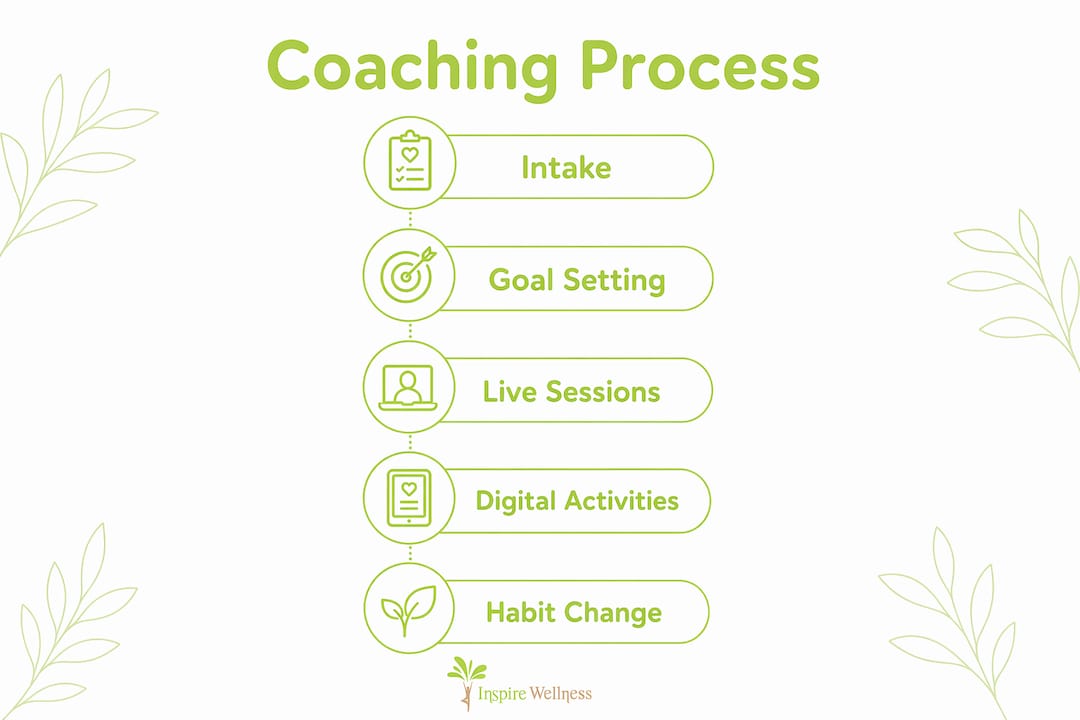
Most behavioral health coaching programs run for 6 to 12 sessions, delivered via phone, video, or in-person, with frequency tailored to the individual. Each session builds on the last, moving from assessment and goal-setting through skill development and ongoing evaluation. Between sessions, clients typically complete personalized assignments that reinforce what was covered, and coaches review this work at the next meeting to maintain momentum.
Common methodologies used in behavioral health coaching include:
- Motivational interviewing: Exploring ambivalence and strengthening a client’s own motivation for change
- Cognitive behavioral strategies: Identifying and shifting unhelpful thought patterns and behaviors
- Mindfulness-based practices: Building present-moment awareness and reducing reactivity
- Acceptance and commitment techniques: Clarifying values and committing to aligned action
- Solution-focused approaches: Identifying what is already working and building on it
Blended care models pair live coaching sessions with digital activities, such as video lessons and interactive exercises, to reinforce skills between appointments. This combination of human connection and technology-enabled practice has shown strong results, particularly for clients managing moderate anxiety and depression.
Pro Tip: Early engagement is critical. Research shows the steepest reductions in anxiety and depression symptoms occur during the first weeks of coaching, when the accountability relationship is forming. Clients who attend sessions consistently in this initial phase see the greatest gains.

Understanding how coaching facilitates habit change helps set realistic expectations: progress is built session by session, with each small win reinforcing the next.

What qualifications should a behavioral health coach have?
Coach credentials vary more than many people realize, and that variability directly affects outcomes. The most reliable coaches hold certification through a recognized body, with the International Coaching Federation being the most widely respected accrediting organization in the field. ICF-certified coaches complete accredited training programs, log a minimum number of supervised coaching hours, and pass a credentialing assessment. Beyond the base certification, coaches working in behavioral health contexts typically receive additional training in evidence-based therapeutic approaches.
Key qualifications and credentials to look for include:
- International Coaching Federation (ICF) certification at the Associate, Professional, or Master level
- Training in motivational interviewing, cognitive behavioral techniques, or mindfulness-based approaches
- Demonstrated coaching hours and ongoing supervision
- Background in psychology, social work, nursing, or a related health field (common but not universal)
- Familiarity with clinical referral pathways for clients whose needs exceed the coaching scope
The distinction between a coach and a licensed therapist matters. Therapists hold advanced clinical degrees, are licensed by state boards, and are trained to diagnose and treat mental health disorders. Coaches are not licensed clinicians, which means they are not bound by the same regulatory framework, but it also means the quality of their training depends heavily on the program and organization behind them. For decision-makers evaluating providers, finding qualified coaching professionals through vetted communities and credentialing bodies is a practical starting point.
How should organizations evaluate behavioral health coaching services?
Not all coaching programs deliver equal results. Programs with certified professionals and evidence-based frameworks consistently outperform those without clear standards, which means the selection criteria an organization uses matters as much as the decision to invest in coaching at all.
Organizational insight: Coaching serves as a cost-effective lever for employers, supporting moderate-need employees who account for the majority of the workforce while reducing demand for higher-intensity clinical services.
Factors to evaluate when selecting a behavioral health coaching provider:
- Coach credentials: ICF certification and training in evidence-based methodologies
- Program structure: defined session models, blended care options, and quality assurance processes
- Clinical oversight: clear protocols for escalating clients to therapy or crisis support when needed
- Outcome measurement: tracking symptom change, engagement rates, and productivity impacts, not just participation numbers
- Integration capability: compatibility with existing employee assistance programs and wellness initiatives
- Accessibility: availability via phone, video, and in-person to reach a diverse workforce
Organizations that integrate coaching into workplace wellness see reductions in employee burnout and absenteeism alongside improvements in engagement and productivity. The key is treating coaching not as a standalone perk but as a structured component of a broader wellbeing strategy, with clear entry points, referral pathways, and measurable goals. For HR leaders building that kind of program, high-standard coaching communities can help identify providers with the rigor and track record your workforce deserves.
Key Takeaways
Behavioral health coaching delivers measurable improvements in mental and emotional well-being through certified, evidence-based coaching within structured programs, making it one of the most accessible and scalable tools available for both individuals and organizations.
| Point | Details |
|---|---|
| Core definition | Behavioral health coaching is a client-centered, evidence-based process focused on skill-building, resilience, and positive behavior change. |
| Proven outcomes | Well-designed programs reduce depression symptoms by 22.5%, anxiety symptoms by 12%, and show that 72% of those who started with elevated symptoms clinically improved or recovered through coaching in blended care models. |
| Coaching vs. therapy | Coaching targets transdiagnostic emotional skills and prevention; therapy diagnoses and treats clinical disorders. |
| Coach qualifications | Look for ICF certification, training in motivational interviewing and cognitive behavioral techniques, and supervised coaching hours. |
| Inspire-wellness approach | Inspire-wellness integrates certified behavioral health coaching into corporate wellness programs, supporting workforce resilience and mental wellbeing at scale. |
Inspire-wellness brings behavioral health coaching to your workforce
Behavioral health coaching works best when it is embedded in a broader organizational wellbeing strategy, not delivered as an isolated session here and there. That is exactly where Inspire-wellness excels. We design and deliver corporate wellness programs that place certified coaching at the center of a structured, evidence-informed framework, giving your employees the mental and emotional support they need before challenges become crises.
Our programs are built for organizations that want measurable outcomes: reduced burnout, stronger resilience, and a workforce that stays engaged and productive. We combine behavioral science with practical, scalable delivery, whether your teams are in one location or distributed across multiple sites. Every program is customized to your organization’s goals, culture, and workforce profile, so coaching lands where it matters most.
Ready to see what a structured coaching program can do for your people? Explore our workplace wellbeing improvement guide to understand how we build programs that deliver lasting results, or connect with our team directly to discuss your organization’s needs.