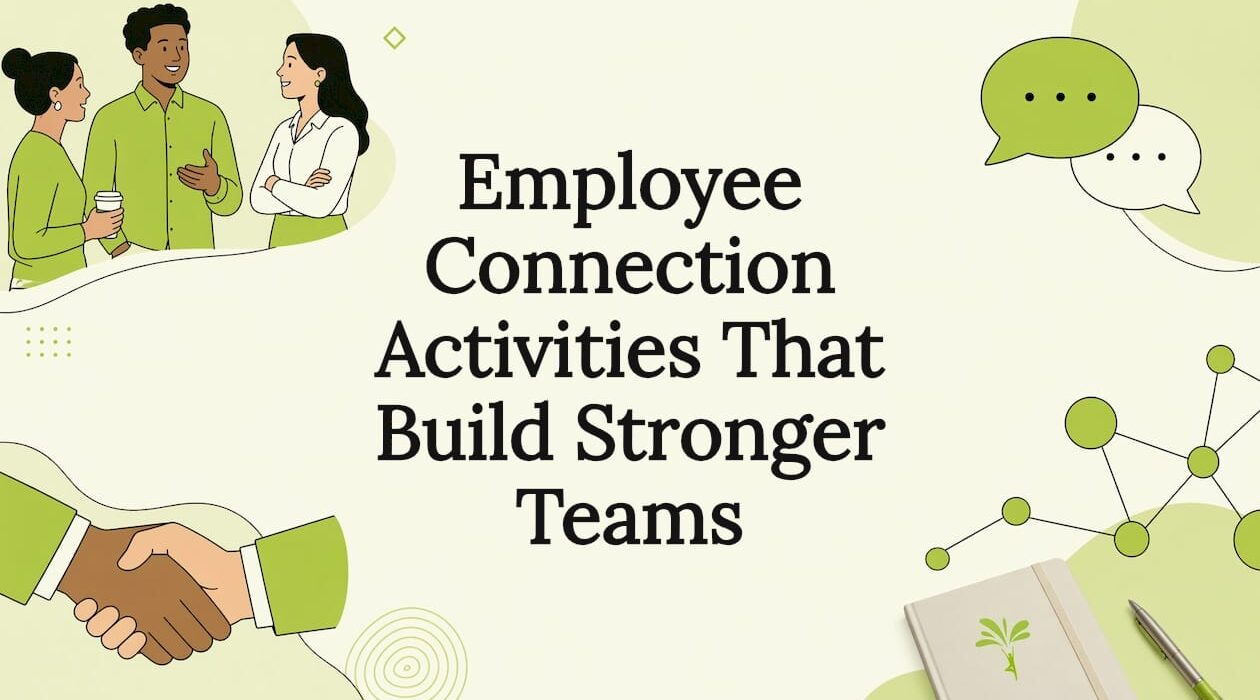
What are employee connection activities, and why do they matter?
Employee connection activities are structured or informal engagements designed to build authentic interpersonal relationships among coworkers and strengthen their sense of belonging at work. They go well beyond proximity. Sharing an office floor or a Slack channel does not automatically create trust, and nearly 40% of U.S. workers reported feeling lonely in early 2026, a figure that underscores how urgently intentional connection is needed.
The business case is concrete. A BetterUp survey found that workplace belonging leads to substantial improvements in job performance, turnover risk, and sick day reduction. Those numbers reflect what happens when people feel genuinely seen and supported, not just employed.
What separates effective connection activities from forgettable ones comes down to four qualities:
- Intentionality. Activities are designed with a clear purpose, whether that is building psychological safety, breaking silos, or welcoming new hires.
- Psychological safety. People participate without fear of judgment, which is the foundation for authentic bonds to form.
- Repeatability. One-off events create a moment. Repeated rituals create culture.
- Inclusivity. Activities work for everyone on the team, regardless of role, location, personality type, or background.
Connection is also frequently confused with loyalty. An employee can be loyal to a company while feeling socially isolated within it. That distinction matters for how you design activities: the goal is not to generate commitment through perks, but to build genuine human relationships through shared experience and mutual recognition. Psychological safety must come first, because without it, even the most creative activities will feel performative.
Creative employee connection activities for every workplace setting
The most effective team bonding activities in 2026 span three environments: in-person, remote, and hybrid. The key is matching the format to the setting rather than forcing one approach across all three.
In-person activities that go beyond the usual
- Walking one-on-ones. Replace the standard desk-side check-in with a 20-minute walk. Movement reduces the formality of the conversation and tends to produce more honest dialogue.
- No-agenda team lunches. A monthly lunch with no work topics on the table gives people space to connect as individuals, not just colleagues.
- Cross-department “donut runs.” Randomly pair employees from different teams for a brief coffee or snack break. Tools like Donut (a Slack integration) can automate the pairing.
- Storytelling sessions. Invite team members to share a two-minute story about a professional turning point or a personal passion. These sessions build empathy faster than most structured icebreakers.
- Theme days. A shared dress code, a cooking challenge, or a trivia competition tied to a cultural moment gives people a low-stakes reason to interact outside their usual work context.
Remote and virtual team connection ideas
- Virtual coffee drop-ins. A 15-minute optional video call at the start of the day, with no agenda, mimics the spontaneous hallway conversation that remote workers miss most.
- Sharing series. Rotating “show and tell” sessions where employees share a skill, hobby, or recommendation keep remote teams feeling like real people to each other, not just avatars on a screen.
- Peer recognition channels. A dedicated Slack or Teams channel for specific, public shout-outs builds community because it highlights shared effort rather than hierarchy. Frequent, specific recognition increases feelings of belonging and encourages discretionary effort.
- Virtual lunch and learns. Knowledge-sharing sessions like 30-minute internal webinars not only build skills but strengthen inter-departmental trust.
Hybrid activities that work across locations
- Cross-functional mission teams. Short, focused project squads that pull members from different departments build relationships through meaningful work. The bonds formed tend to outlast the project itself.
- Buddy systems for new hires. Pairing a new employee with an experienced colleague creates an immediate human connection beyond their direct manager, reducing early isolation significantly.
- Shared celebration rituals. Acknowledging birthdays, work anniversaries, and project completions in a consistent, visible way gives distributed teams a shared rhythm.
Pro Tip: Voluntary participation is not a compromise. It is the design principle. Activities that feel mandatory breed resentment; activities that feel genuinely optional tend to attract more authentic engagement over time.
How do you choose the right activities for your team?

Selecting the right staff morale boosters starts with understanding your team’s actual composition, not the team you imagine you have. A 30-person hybrid engineering team has different connection needs than a 10-person fully remote customer success team or a 200-person in-office sales floor.
Start by mapping four dimensions:
- Work pattern. Remote, in-office, and hybrid employees need different formats. Remote workers often feel the most disconnected and require targeted, deliberate support.
- Team stage. New hires need onboarding buddies and early relationship-building. Established teams may need cross-functional exposure to break entrenched silos.
- Demographics and preferences. Introverts and extroverts engage differently. Employees with caregiving responsibilities may not be available for after-hours social events. Inclusivity means designing around real lives, not ideal availability.
- Objectives. Are you trying to build psychological safety on a team that avoids conflict? Improve collaboration between departments that rarely interact? Recognize contributions that have gone unseen? Each goal points to a different type of activity.
Once you have clarity on those dimensions, budget becomes a practical constraint rather than a creative one. Many of the most effective team-building exercises cost nothing: walking meetings, peer recognition channels, and storytelling sessions require time and intention, not budget. Lunch-and-learn sessions, buddy programs, and cross-functional squads can be built into existing workflows without additional spend.
A phased approach prevents the common mistake of launching too many initiatives at once and sustaining none of them. A 30–60–90 day plan gives you a practical structure:
- First 30 days: Listen. Run a short pulse survey. Identify connection gaps. Choose two rituals to implement.
- Next 60 days: Train managers on check-ins and recognition. Launch buddy programs. Start peer recognition.
- Final 30 days: Share progress. Adjust what is not working. Scale what employees value most.
Avoid the one-size-fits-all trap. An activity that energizes one team can feel draining or exclusionary to another. Build in feedback from the start, and treat the first iteration as a pilot, not a permanent program.
How do you measure the success of connection activities?
Measuring the impact of employee engagement ideas does not require a complex survey platform. It requires the right questions, asked consistently, with visible follow-through.
The most practical metrics fall into three categories:
- Participation rates. Are people showing up voluntarily? Declining attendance is an early signal that an activity has lost relevance or feels obligatory.
- Pulse survey responses. Short, targeted questions work better than long engagement surveys. Ask things like: “Do you feel supported by your teammates?” or “Do you feel comfortable sharing a concern with your manager?” Run these monthly or quarterly, not annually.
- Qualitative feedback. Team retrospectives, skip-level conversations, and anonymous suggestion channels surface the nuance that numbers miss. If employees say a ritual feels forced, that feedback is more valuable than a participation rate.
The benefits you are tracking connect directly to the belonging statistics cited earlier: improved collaboration, lower turnover, stronger morale, and greater resilience during periods of change. Teams with strong interpersonal bonds adapt faster during organizational change because trust already exists. They assume positive intent and solve problems together rather than retreating into self-protection.
One practical caution: survey fatigue is real. Sending a 40-question engagement survey twice a year produces worse data than sending five targeted questions every month. Keep pulse checks brief, act visibly on what you hear, and close the loop by telling employees what changed as a result of their input.
Tracking psychological safety and inclusivity indicators matters as much as tracking participation. If certain employee groups consistently opt out of activities, that pattern is data. It tells you the activity design is not working for everyone, and that is worth investigating before scaling.
What does the research say about building authentic connections?
The research on workplace connection points in a consistent direction: connection is not a personality trait or a cultural accident. It is a coachable, designable outcome. Managers who embed connection as a daily behavior, rather than delegating it to HR event planning, produce stronger results than those who rely on periodic team-building events.
Leadership modeling is the single most powerful lever. Managers who ask meaningful questions regularly and show appropriate vulnerability create a cultural foundation that no activity can replicate on its own. When a leader shares what they found difficult about a project, or genuinely asks how a team member is doing rather than how the project is going, they signal that the workplace is safe for honesty. That signal travels.
Research insight: A BetterUp survey found workplace belonging produces a 56% increase in job performance, a 50% reduction in turnover risk, and a 75% decrease in sick days. These outcomes do not come from annual retreats. They come from consistent, human-centered daily practices.
Cross-functional collaboration is one of the most durable pathways to lasting employee relationships. Isolated social events create moments; shared work across departments creates context, mutual respect, and relationships that survive organizational change. The research is clear that breaking silos through meaningful collaboration outperforms standalone social activities for long-term connection.
Forced or mandatory activities consistently backfire. Research cited from the University of Sydney found that when team-building feels mandatory, it can generate resentment and pushback. The alternative is not to abandon structure, but to design small, optional, repeatable rituals that give familiarity space to grow naturally. The “Grease Wednesdays” example from a real workplace illustrates this well: what started as two colleagues sharing an informal lunch ritual grew organically into a department-wide cultural touchstone, precisely because it was never mandated.
For HR leaders looking to build a culture of wellbeing and connection, the most important insight from the research is this: start with psychological safety, not programming. No activity lands well in an environment where people do not feel safe to be themselves.
How do you overcome resistance when rolling out connection activities?
Resistance to connection activities usually signals one of three things: the activity feels forced, the timing is wrong, or employees do not trust that leadership is genuinely invested. Each cause has a different fix.
When activities feel forced, the solution is voluntary design. Frame participation as an invitation, not an expectation. Let early adopters become informal advocates. Organic momentum builds credibility faster than any top-down mandate.
When timing is the issue, look at what else is competing for attention. Launching a new connection program during a high-pressure product deadline or a period of organizational uncertainty will produce low engagement regardless of how well the activity is designed. Timing matters as much as content.
When trust is the barrier, the fix is leadership behavior, not programming. If managers do not participate visibly, employees read that as a signal that connection is not actually valued. Leaders who show up to voluntary sessions, share something personal in a storytelling round, or publicly recognize a peer send a message that no internal communications campaign can replicate.
A few practical steps for navigating resistance:
- Co-design with employees. Involve team members in choosing or shaping activities. People support what they help build.
- Start smaller than you think you need to. A pilot with one team builds proof of concept and generates the peer stories that reduce skepticism elsewhere.
- Name the purpose clearly. Employees are more likely to engage when they understand why an activity exists, not just what it involves.
- Acknowledge what has not worked before. If previous team-building efforts fell flat, say so. Naming the past failure builds credibility for the new approach.
Workplace wellbeing programs that are co-designed with employees and grounded in genuine psychological safety consistently outperform top-down initiatives, regardless of budget or format.
What frequency of connection activities produces the best results?
Frequency matters as much as format. A single annual retreat does not build connection; it creates a memory. Sustained connection comes from repeated, low-pressure interactions woven into the existing rhythm of work.
A practical cadence that works across most team sizes and settings:
Weekly rituals (5–15 minutes)
- Peer shout-outs in Monday stand-ups or a dedicated recognition channel
- A brief check-in question at the start of team meetings (“What’s one thing you’re looking forward to this week?”)
Monthly touchpoints (30–60 minutes)
- Lunch-and-learn sessions where employees share expertise
- Peer-nominated recognition tied to company values
- Pulse survey with three to five targeted connection questions
Quarterly events (half-day or full-day)
- Cross-functional project kickoffs or retrospectives
- Team celebrations for hitting shared goals
- “Ask Me Anything” sessions with senior leaders
Annually (one to two days)
- Offsite or in-person gathering for fully remote or hybrid teams
- Culture review and connection strategy refresh based on the year’s pulse data
The weekly and monthly touchpoints carry the most weight. They are the rituals that build familiarity over time, and familiarity is the precondition for trust. Quarterly and annual events reinforce what the daily and weekly habits have already built; they cannot substitute for them.
For new hires specifically, front-load the connection investment. The first 30 days are when isolation risk is highest and when a buddy program, a structured introduction to key people, and a warm team welcome have the greatest impact on long-term retention and belonging.
Real-world examples of employee connection done well
The research pool and published case studies point to several patterns that appear consistently in organizations that build strong connection cultures.

The informal ritual that scaled. One workplace leader described how a casual weekly lunch between two colleagues, which they called “Grease Wednesdays,” grew organically into a department-wide gathering. No mandate, no budget, no formal program. The ritual worked because it was voluntary, repeatable, and genuinely enjoyable. Within months, it had smoothed tensions between departments and created friendships between people who had never previously interacted. The lesson: small, human moments compound.
The buddy system that reduced early turnover. Organizations that pair new hires with experienced colleagues during onboarding consistently report faster time-to-belonging and lower early attrition. The structure matters: scheduled check-ins, clear expectations, and guidance on who to meet make the difference between a buddy program that works and one that fades after week two.
Cross-functional squads that outlasted the project. A product launch team composed of members from marketing, engineering, and customer success built relationships that persisted long after the project closed. The shared goal, defined roles, and end-of-project reflection created context for trust that isolated social events rarely produce. Team collaboration built through real work tends to be more durable than connection built through play alone.
Recognition programs that changed daily behavior. Teams that introduced peer-to-peer recognition channels reported that the practice shifted how people noticed and talked about each other’s contributions. Specific, public recognition, naming what someone did and why it mattered, created a feedback loop that reinforced the behaviors the team valued most. The program required no budget, only a channel and a habit.
Each of these examples shares a common thread: the activity was designed to fit into existing work rhythms rather than interrupt them, and it was sustained long enough to become part of the culture.
Key Takeaways
Effective employee connection activities are intentional, repeatable, and inclusive, and the data shows they directly improve performance, reduce turnover, and build the psychological safety that makes teams resilient.
| Point | Details |
|---|---|
| Belonging drives measurable outcomes | Workplace belonging produces a 56% increase in job performance, a 50% reduction in turnover risk, and a 75% decrease in sick days. |
| Voluntary design outperforms mandates | Forced activities breed resentment; optional, repeatable rituals build genuine trust over time. |
| Frequency beats intensity | Weekly and monthly rituals build more durable connection than annual retreats or one-off events. |
| Leadership modeling is the foundation | Managers who ask meaningful questions and show vulnerability create the psychological safety that makes all other activities work. |
| Inspire-wellness supports the full picture | Inspire-wellness combines behavioral science, wellbeing coaching, and resilience frameworks to help organizations build connection that lasts beyond any single activity. |
Inspire-wellness: a structured path to lasting employee connection
Most connection programs stall not because the activities were wrong, but because the underlying culture was not ready to support them. Psychological safety, emotional resilience, and manager capability are the conditions that make team bonding activities actually work, and building those conditions requires more than a calendar of events.
Inspire-wellness works with organizations to build those conditions from the inside out. Through corporate wellbeing coaching grounded in behavioral science, we help HR teams and leaders design connection strategies that are tailored to their workforce, sustainable beyond the first quarter, and measurable in ways that matter to the business. Our Wellness Pyramid framework addresses the emotional, mental, and relational dimensions of employee health together, because connection does not thrive in isolation from wellbeing.
Whether your team is fully remote, hybrid, or in-person, we can help you move from one-off events to a culture where belonging is built into the daily rhythm of work. Explore our employee wellbeing programs or reach out to schedule a consultation and see what a tailored connection strategy looks like for your organization.